Seattle, the Olympic Peninsula, and Reaching the Pacific
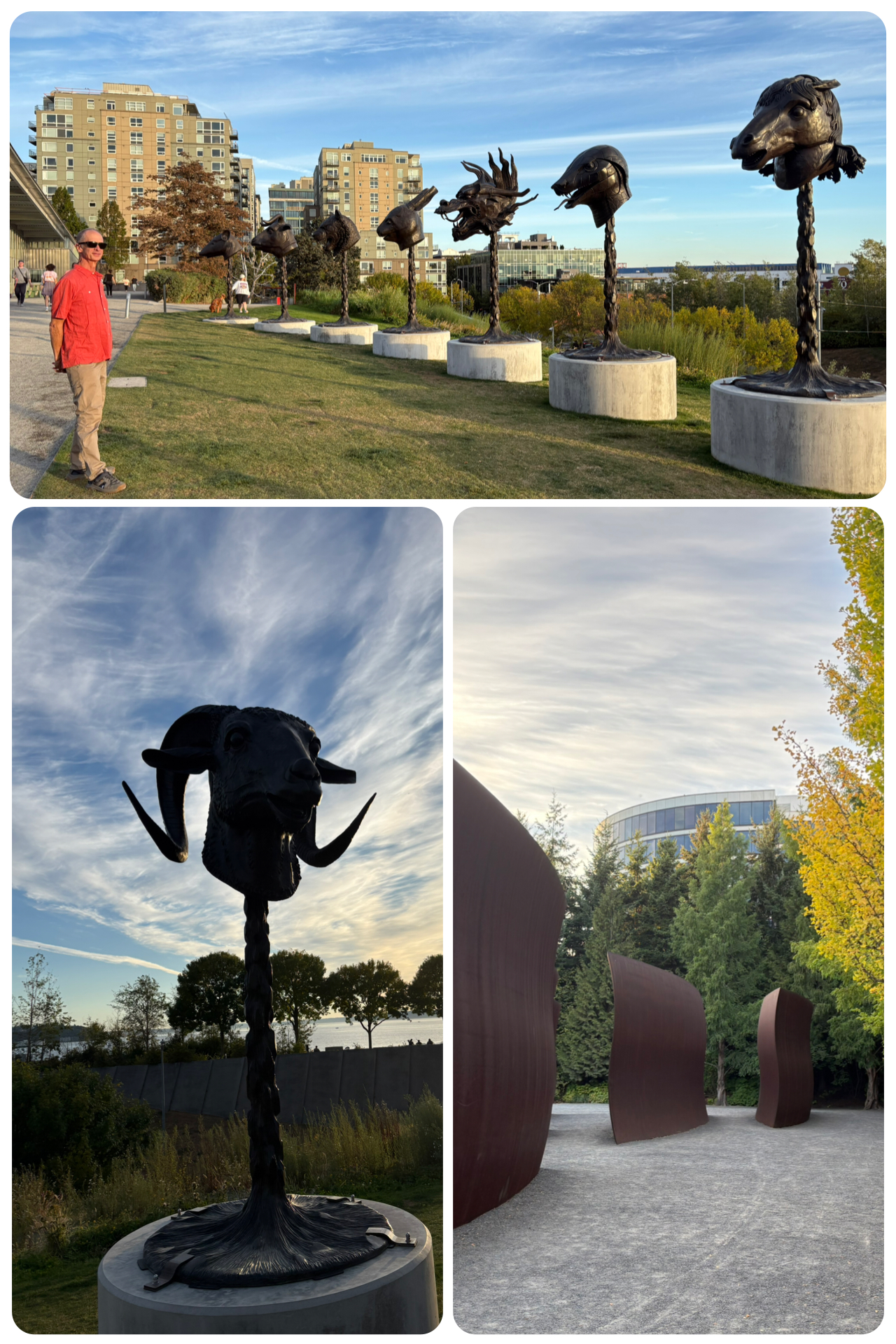
Well, I guess we’re accustomed to this lifestyle, because getting back on the road after a week in Seattle felt right. And Seattle was great! We were fortunate to have digs courtesy of family (the Joslyns) in West Seattle, and right after washing up we set off via water taxi to downtown Seattle to catch a sunset from the lovely Olympic Sculpture Park. The town was hopping with excitement and joy that night thanks to the Seahawks exciting and successful season opener against the team they had vanquished in last season’s Super Bowl.
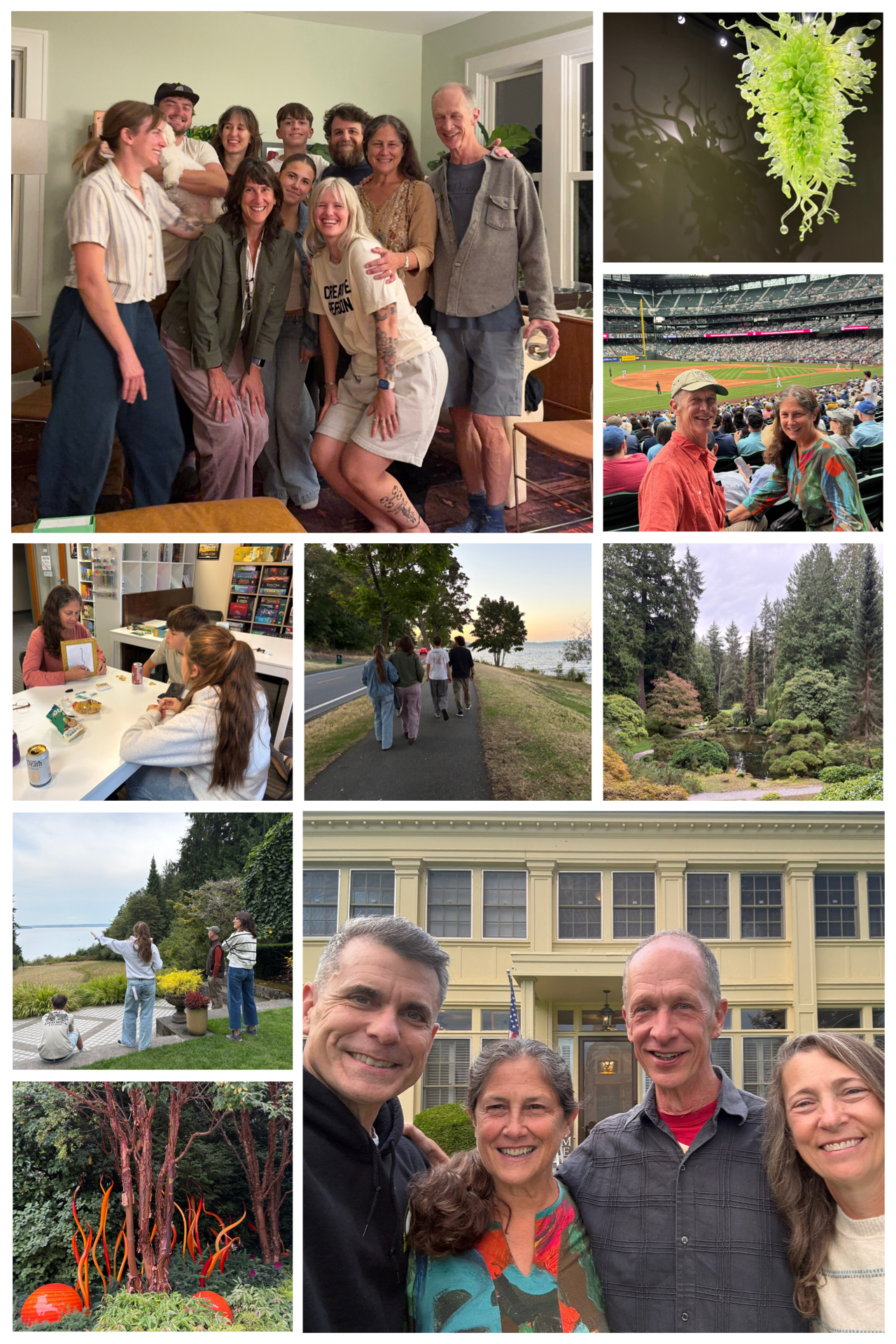
It was a week of tourism, chores and especially family time. We enjoyed a Mariners (baseball) game, the campy, fascinating Seattle Underground tour, Pike Place Market, the Chihuly Glass exhibit, the Museum of Flight, and general wandering. The friends and family time was just terrific.
- The Marstillers showed us their beloved Bainbridge Island, including the Bloedel Reserve – fantastic gardens created by a color-blind tycoon, so the emphasis is on variety of textures – and Spencer’s Tabletop Enclave for young game players.
- The McFarlane’s gave us a brief, history-focused walking tour of Joint Base Lewis-McChord, where Matt is stationed as Commanding General of I Corps – a role that he describes as threefold: soldier, mayor and diplomat.
- The Georges showed us a bit of Mercer Island and a good time.
- The finale was dinner and games with a choice collection of the Grinnan cousins (a mini beach week reunion), interrupted for a walk to the shore to see the resident beavers while active at sunset.
You get the idea: great times with loved ones who lead interesting lives and share our love for wildlife, wilderness and, well…what this country offers.
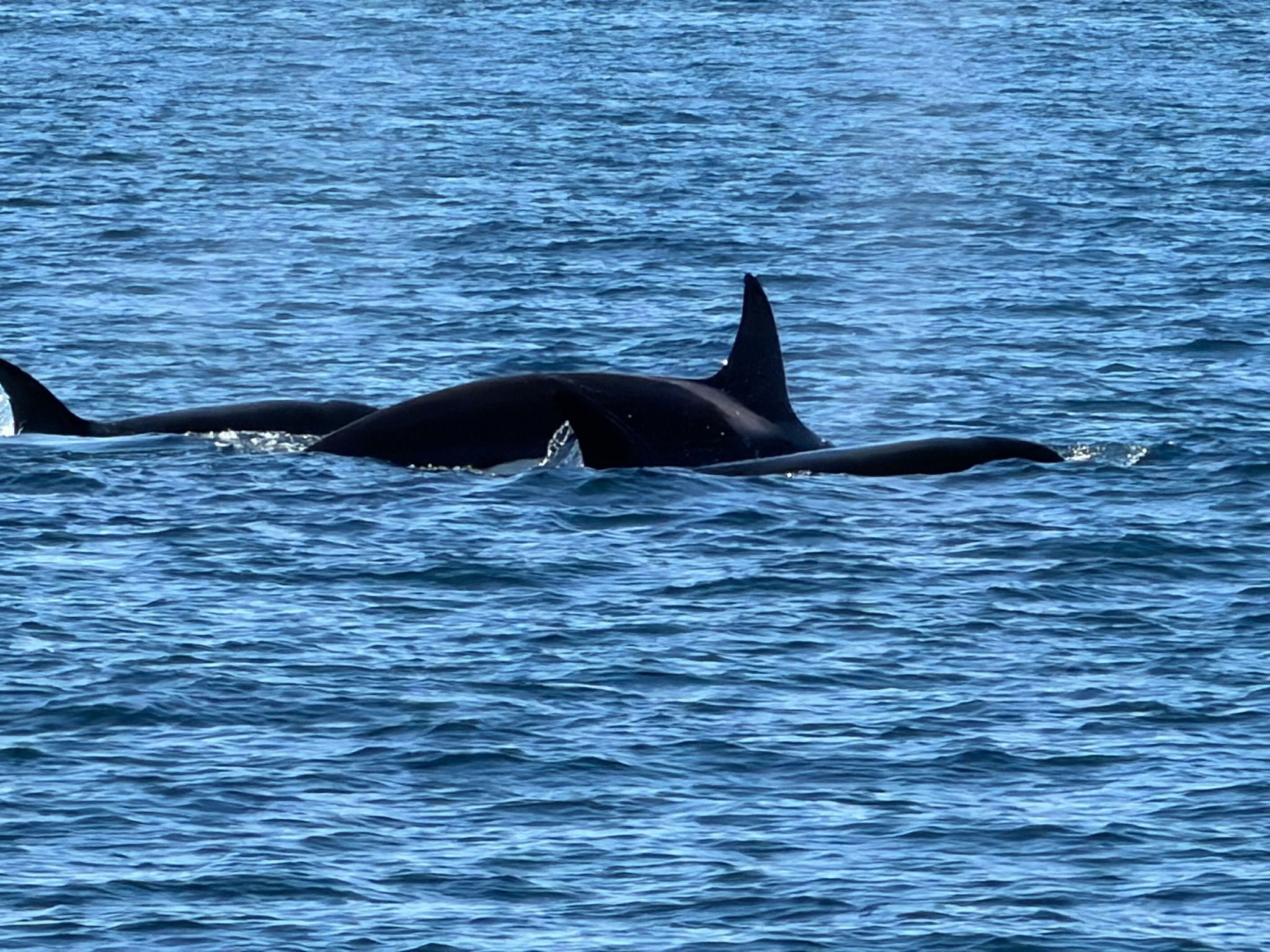
Our foray into the Olympic Peninsula began with a bucket list item – whale watching. A pod of Orcas put on quite a show – first just casually commuting, then milling when they hit upon a hapless harbor seal. We moved on when another tour boat approached, demonstrating that there’s considerable courtesy and information-sharing among the tour operators in the Straights of Juan de Fuca. We learned that all serve as citizen scientists, recording which whales they see and where. Closer to the Canadian side we found humpbacks snacking in their rather lazy manner (baleens don’t hunt, they filter). When we were about to turn back to Port Angeles, the sharp-eyed captain said, “I see a whale breaching about 1-2 miles out.” After many minutes as the ship sped in that direction, we too could see the tremendous splashes as one energetic humpback (“Pinnacle”) raised his fluke, dove deep, then soared out the water. So cool!
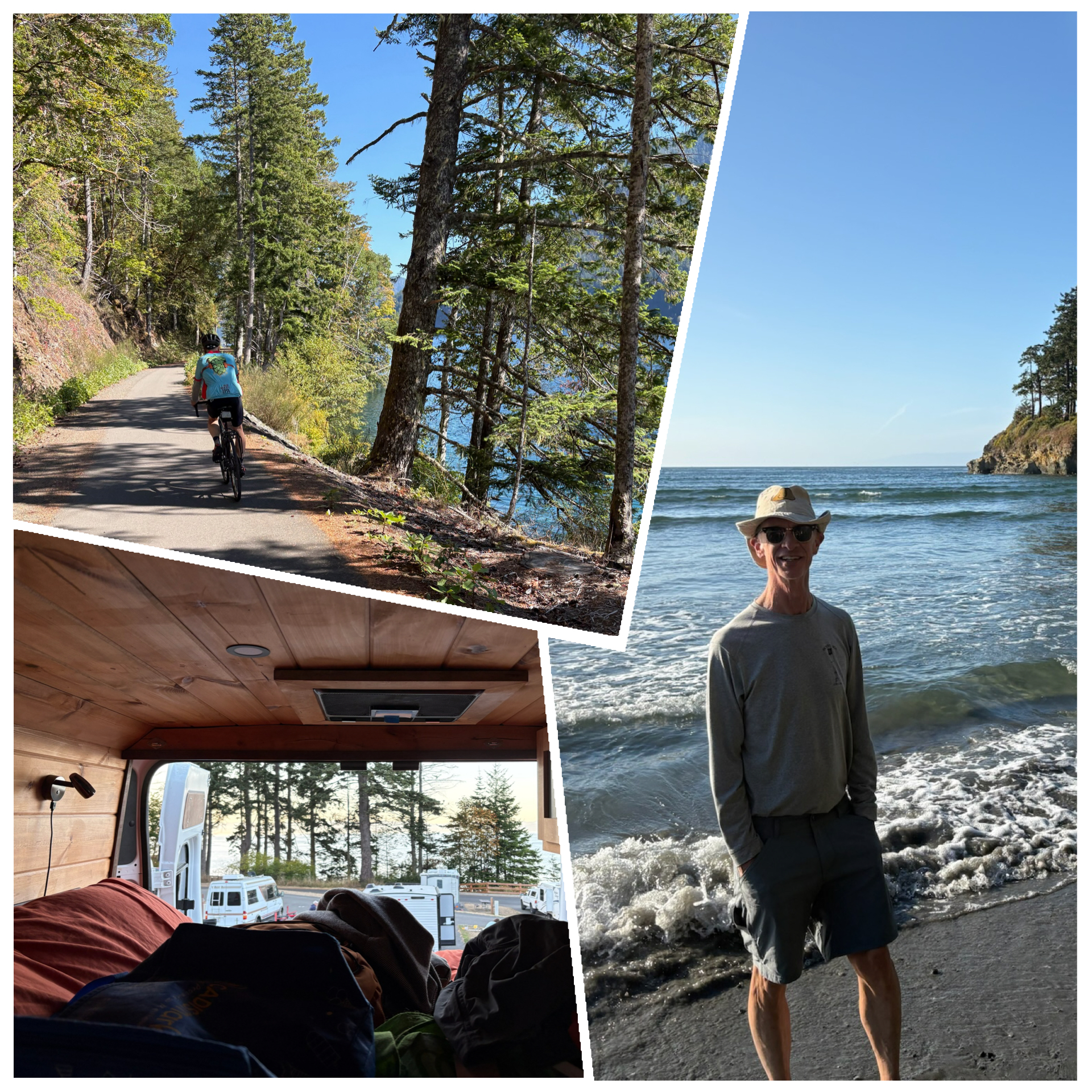
Other delights on north side of the Peninsula included staying at the Salt Creek Campground overlooking the Strait of Juan de Fuca and biking along Lake Crescent.
We then went inland to the old growth, temperate Hoh Rainforest and geeked out on a ranger-led tour of the Hall of Mosses trail. Ranger Simon was a gifted teacher, and I can’t resist sharing some of the fun facts we learned about this rare and rich ecosystem.
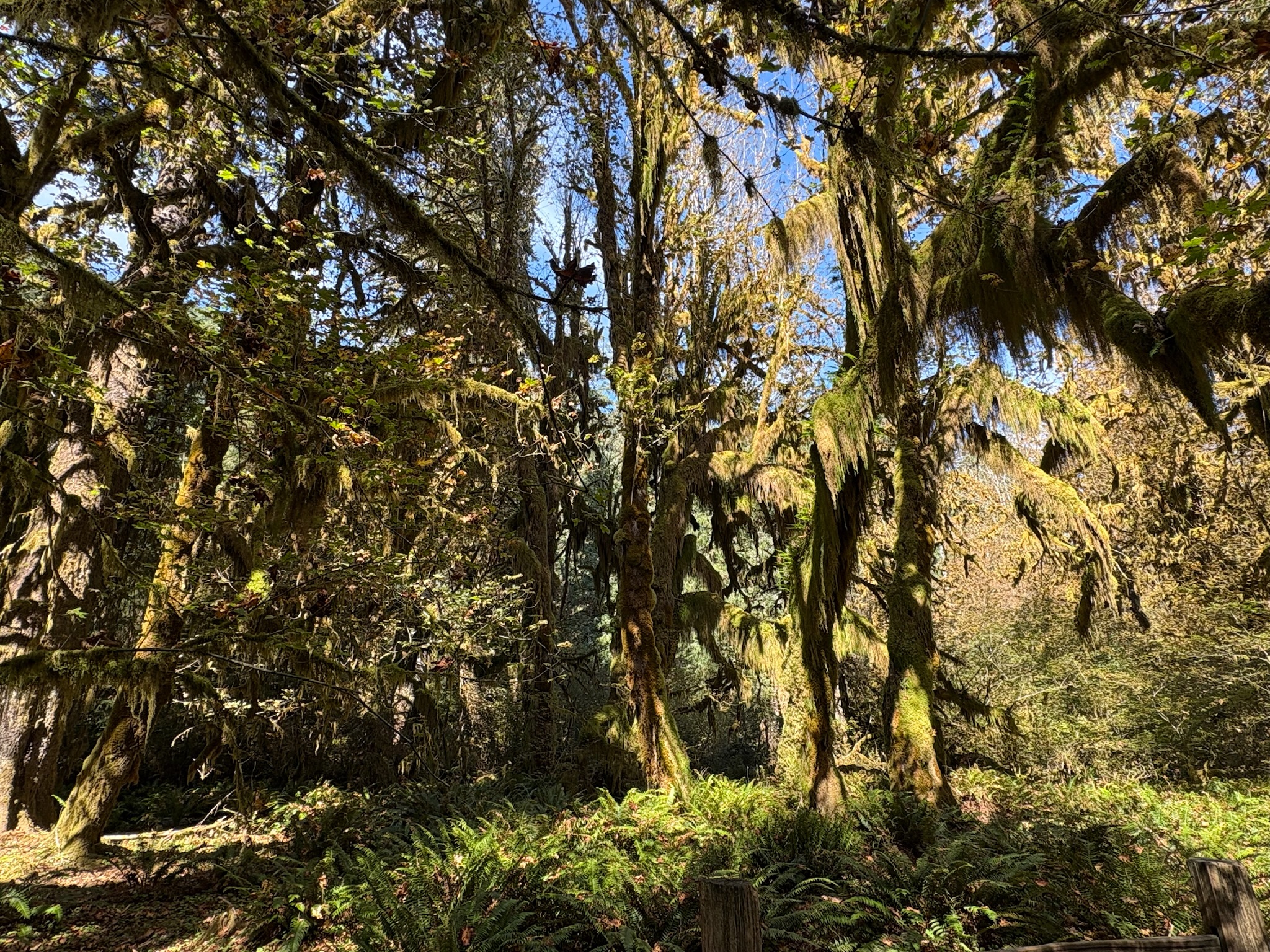
- The rainfall from the Pacific amounts to about 140” per year (Seattle gets 40”) but is now way below average.
- The Hoh was part of a long ribbon of old growth temperate rain forests that stretched from San Francisco to southern Alaska of which only 10% is left.
- The Big Leaf Maple can hold 100 species of epiphytes and 1 ton of moss (dried!) and pockets of soil up to 2 feet deep, which contain tree roots!
- Lichen is the forest’s nitrogen “fixer,” accounting for 20% of the tree’s requirement and serving to bank moisture.
- The mycorrhizal network – the fungi – permeates the entire forest and enables the signaling among trees that we’d heard about in fiction (The Overstory, referenced in an earlier blog) – the “wood wide web.”
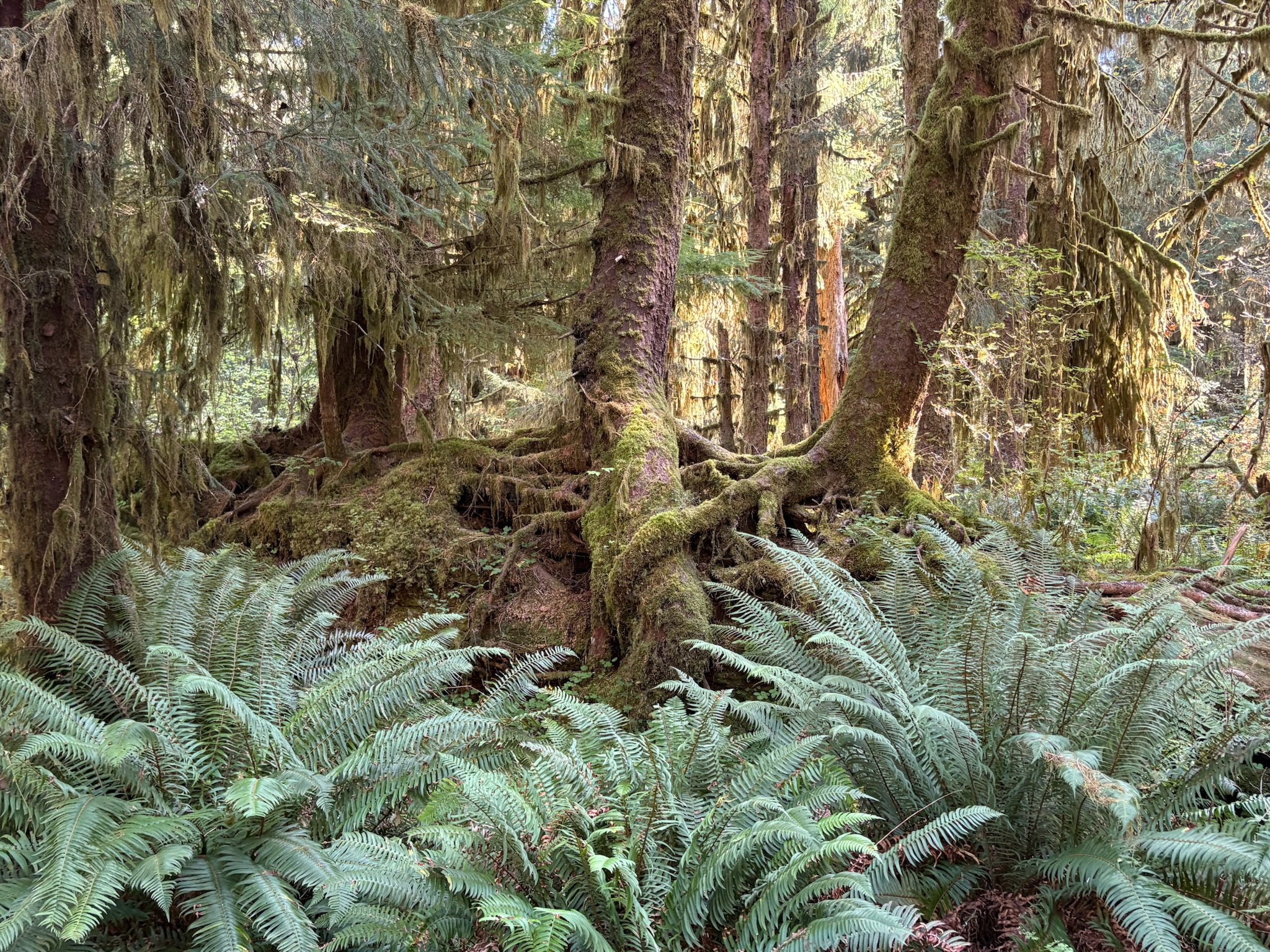
- 90% of the trees started on fallen “nurse logs,” which account for their growth in straight lines and, delightfully, roots that serve not only to provide nutrients from the soil but also as props, keeping the trees up over hollowed out bases.
- The superpower of temperate rainforests is biomass (vs. the species diversity of tropical rainforests) – they are “the world’s greatest carbon sponge.”
We picked up a hitchhiker from the Czech Republic on the way out of the Hoh who told us of struggles to complete his route from Glacier to the end of the Olympic due to fires and road closures, including on our intended route to Rialto Beach. So, we pivoted to a day of fly fishing on the Bogachiel River (no luck for Pablo, not even a touch) and then went on to Kalaloch Beach. Note: Pacific NW Trail hikers (or any other long-term hikers) are ripe! Good thing the sole belted seat in Evangeline’s cabin is far removed from the cockpit.
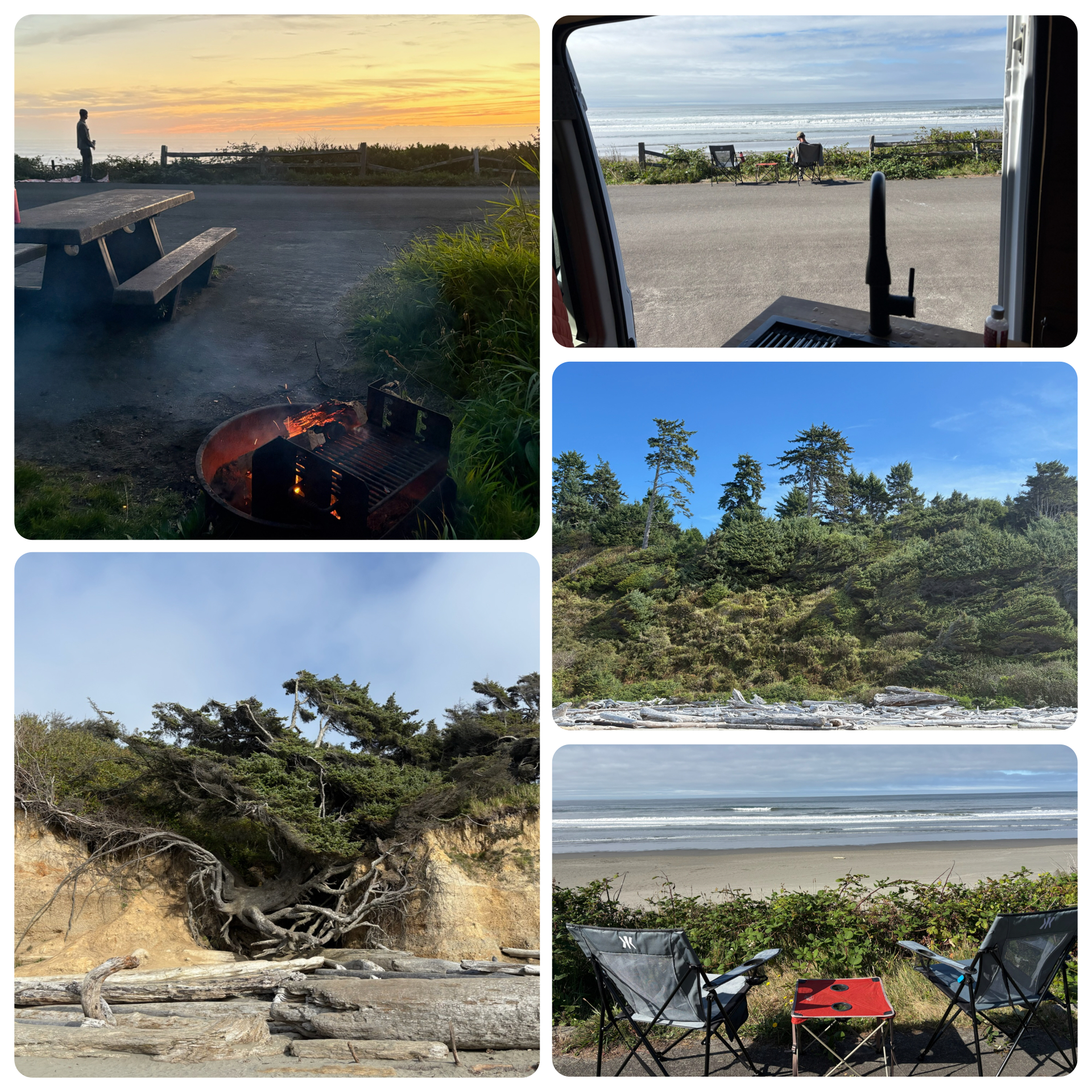
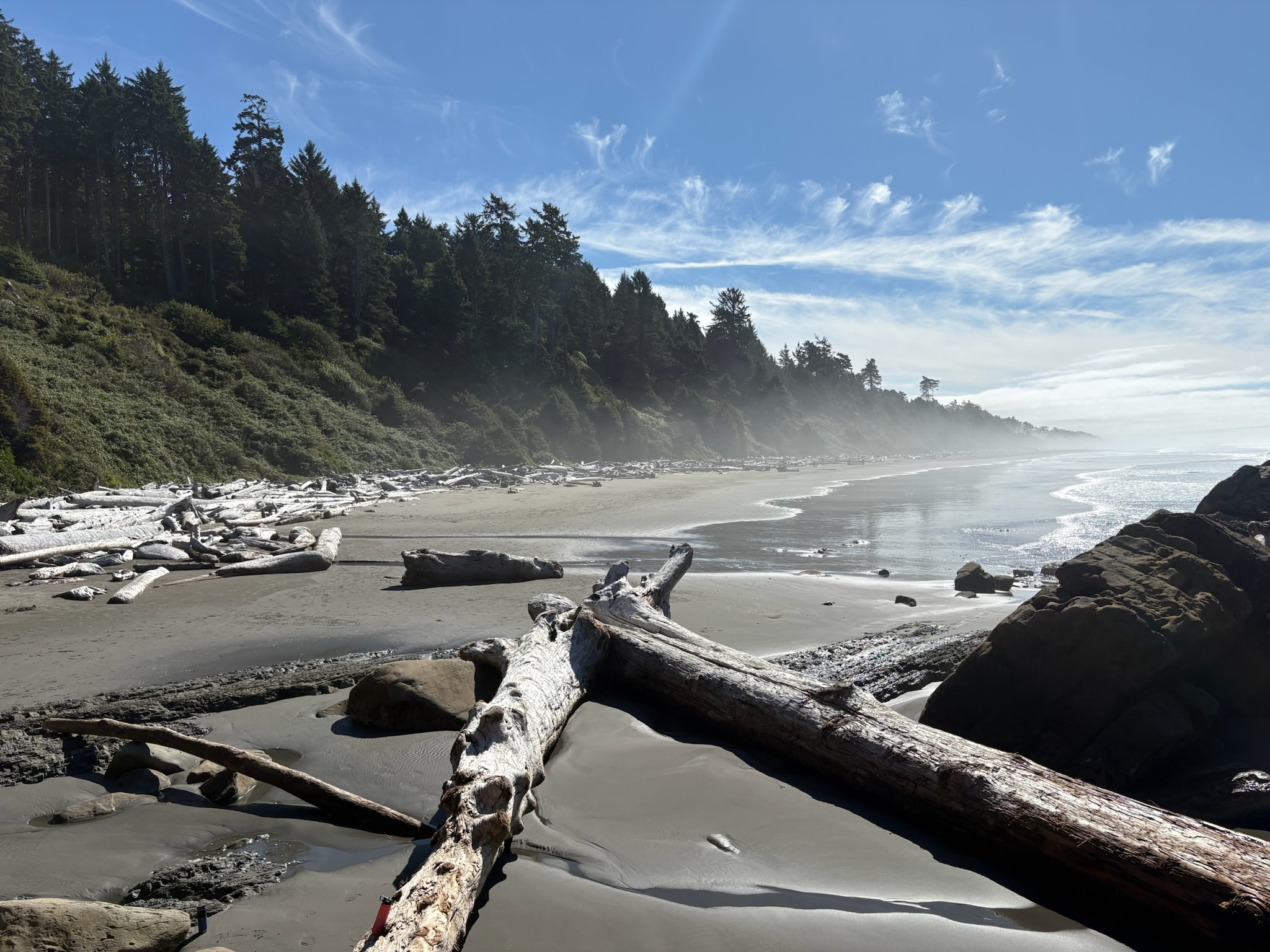
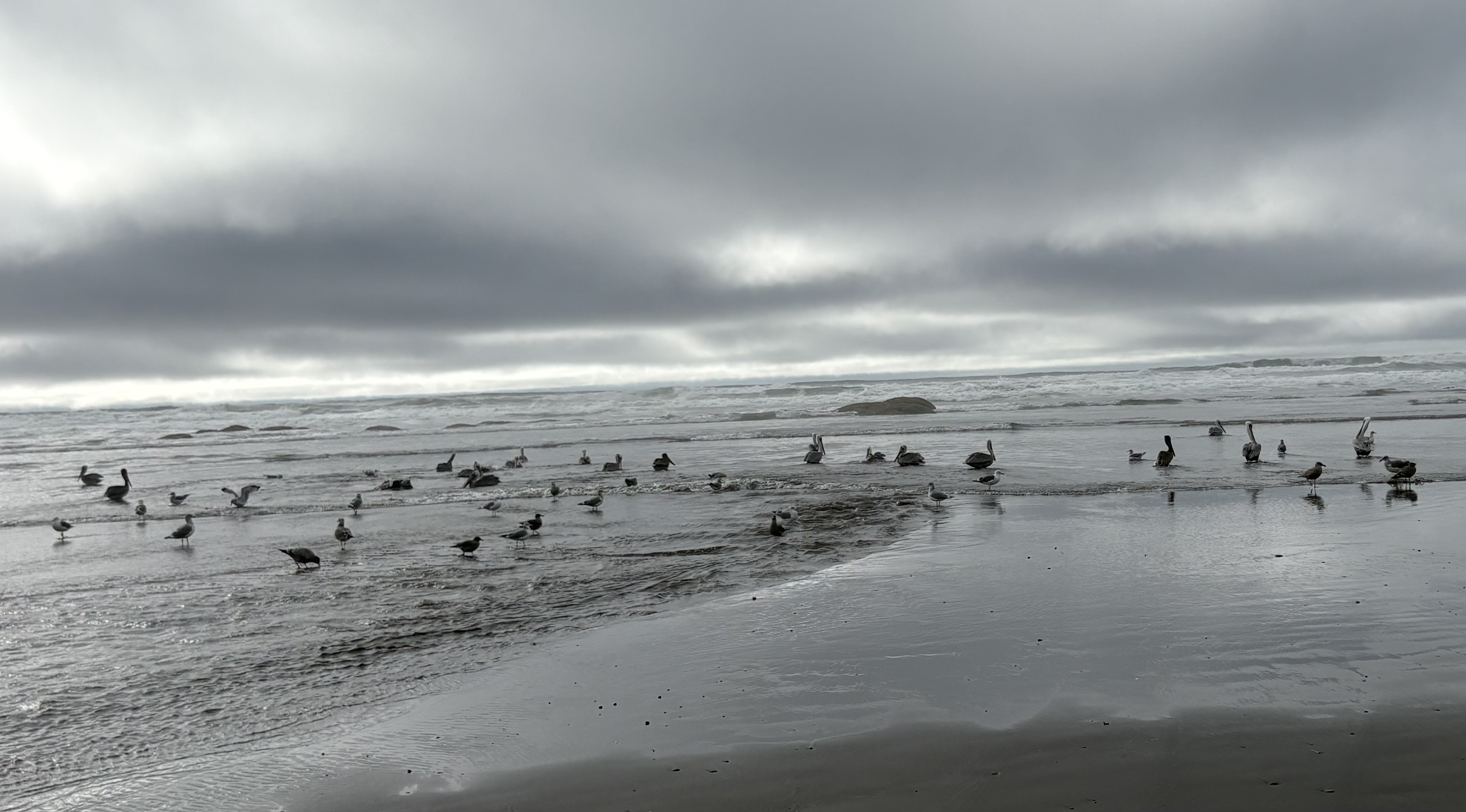
We marked our 6-week anniversary on the road when we hit the misty Pacific after 6,000 miles of exploring since leaving the hot, sunny Atlantic Coast. And we enjoyed our first campfire on the first day of a lifted fire ban. Kalaloch was populated by people who return annually, in some cases for generations – understandably. There were more pelicans than we had ever seen in one place. I recall my beloved cousin Roger (RIP) saying once, “Those pelicans… where are they going, what are they doing?” And I have been wondering about their behavior ever since. They fly solo, in small groups, or in big formations. They fly high and low, skimming the waves or soaring over beachfront houses. They are endlessly fascinating and, on this beach, we witnessed a new (to us) behavior – gathering by the hundreds, along with gulls, squabbling and bathing by the mouth of a creek.
It was hard to tear ourselves away from our sweet perch overlooking the Pacific, but there is so much else to see and do! We are currently enjoying listening to John Steinbeck’s “Travels with Charley” (thanks for the great suggestion, Zach!). In it, he discusses a term in a category I love – words or phrases that don’t translate well. Vacilando: a Spanish word akin to wandering but more directed. As he explained, wandering means moving aimlessly without a fixed course or destination, whereas vacilando indicates you are traveling with a general direction in mind, but you do not care if or when you arrive because the journey itself is the whole point.
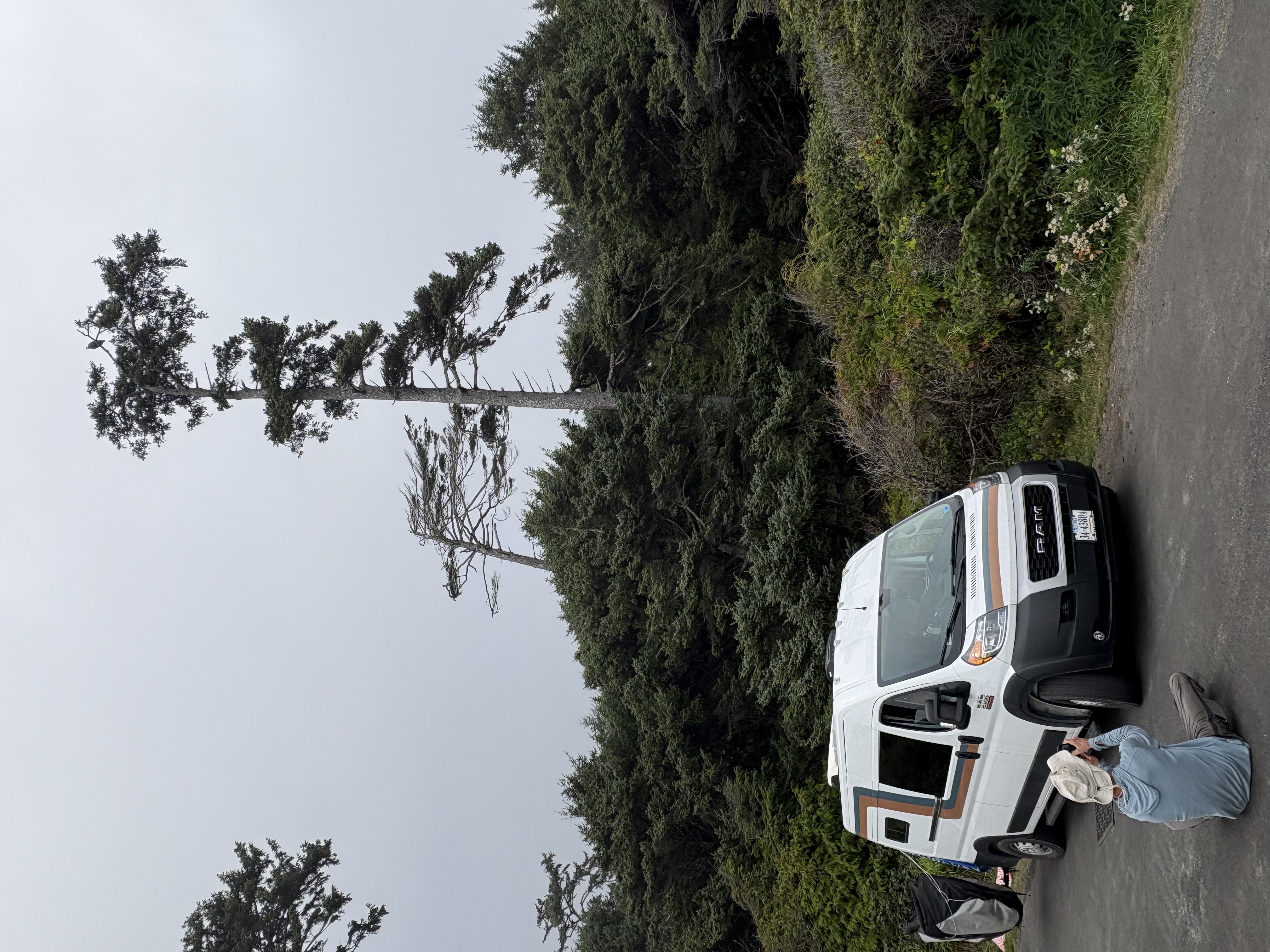
So here we are, having snagged a spot in a Washington state park and poised to head down the Pacific coast, loosely planning one or two days at a time. Thanks for following!