Going to Church – the Heavenly Oregon Coast and the Redwood Cathedrals
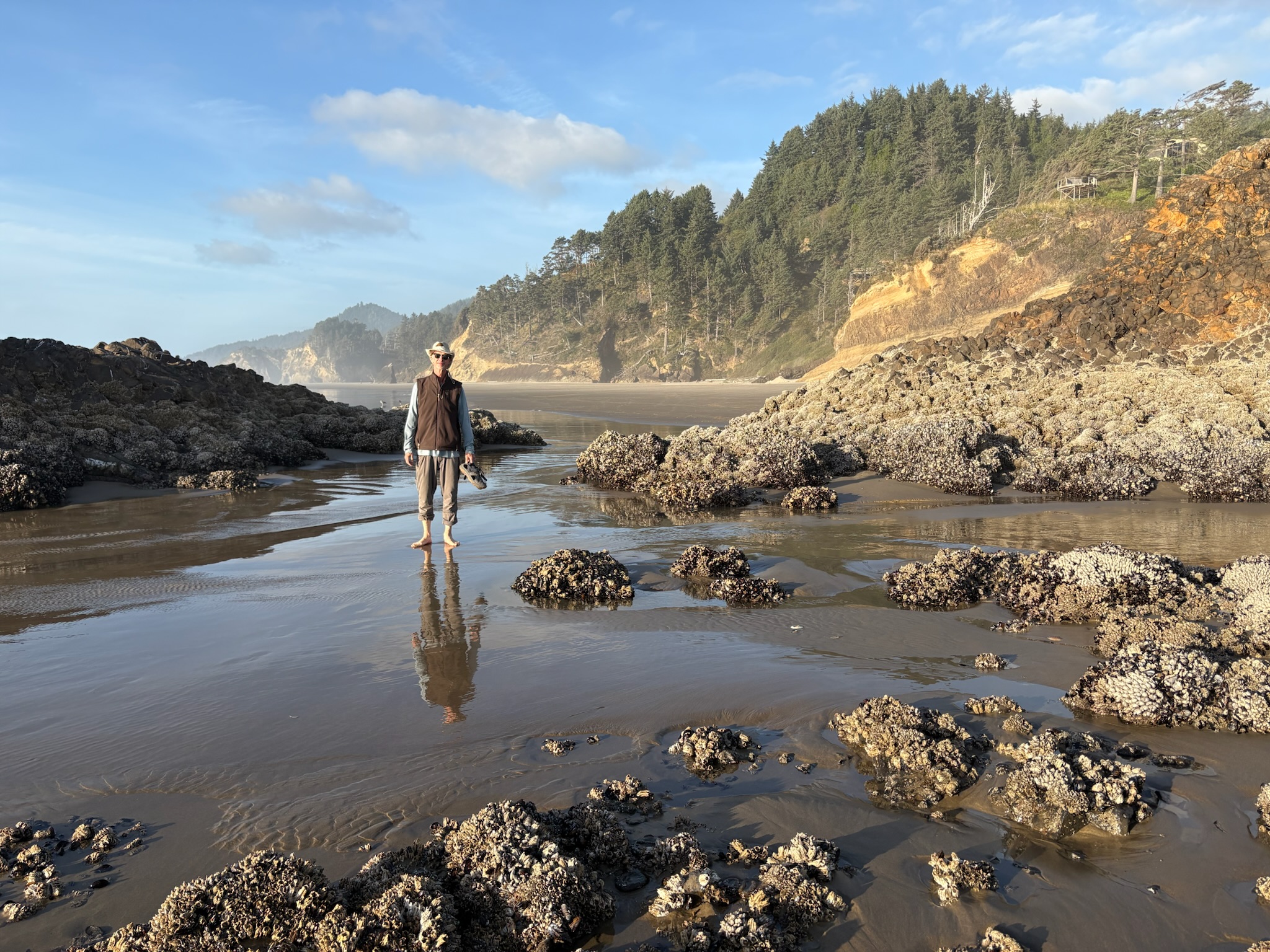
Our tour of the great state of Washington ended with a stay in a terrific beachside campground behind broad dunes covered in richly diverse vegetation – and a visit to a wonderfully quirky place.
The Cranberry Museum was actually many things. A gift shop, a registered (but defunct) post office, and a parts depot for the unrivaled Furman Pickers that have not been made there for years, but are still in use by the cranberry farmers in the area. They were handmade and not standardized, so when replacement parts are needed old machines are raided and fit is not assured. The museum collection was not just about the history and process of cranberry production; it also contained antiques from all the surrounding attics – a reconstituted 1930s kitchen, logging tools, old radios, and other odds and ends.
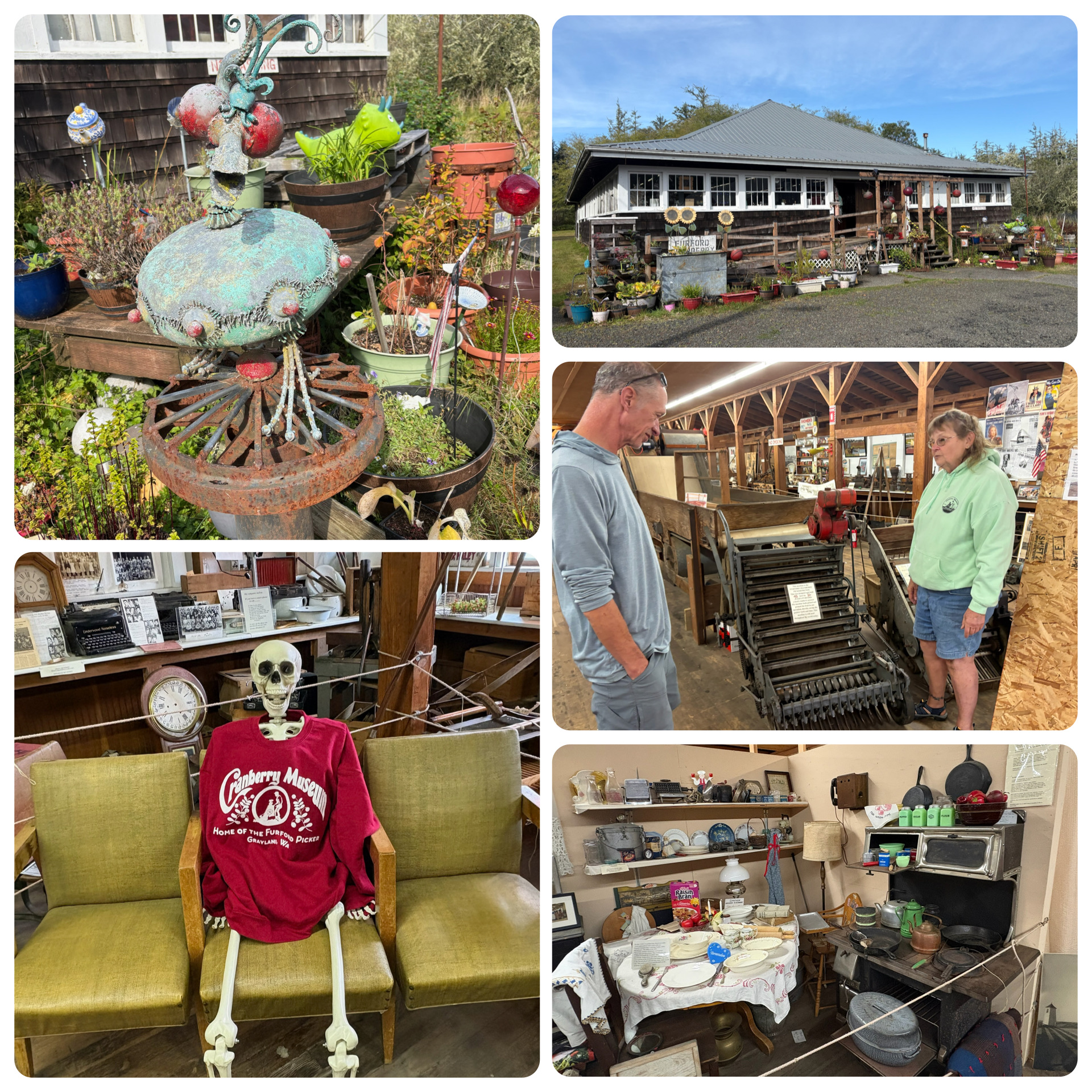
We picked up some niche knowledge. For example, that the postmistress was the best person to call upon to catch up on community gossip because she read all the postcards. Also, the difference between dry and wet cranberry cultivation, and that Ocean Spray is a farmer-owned coop. Finally, we learned by overhearing clucking after a rather bedraggled farmer departed with his picker part that it’s awfully late in the season to be making sure your machine is in working order.
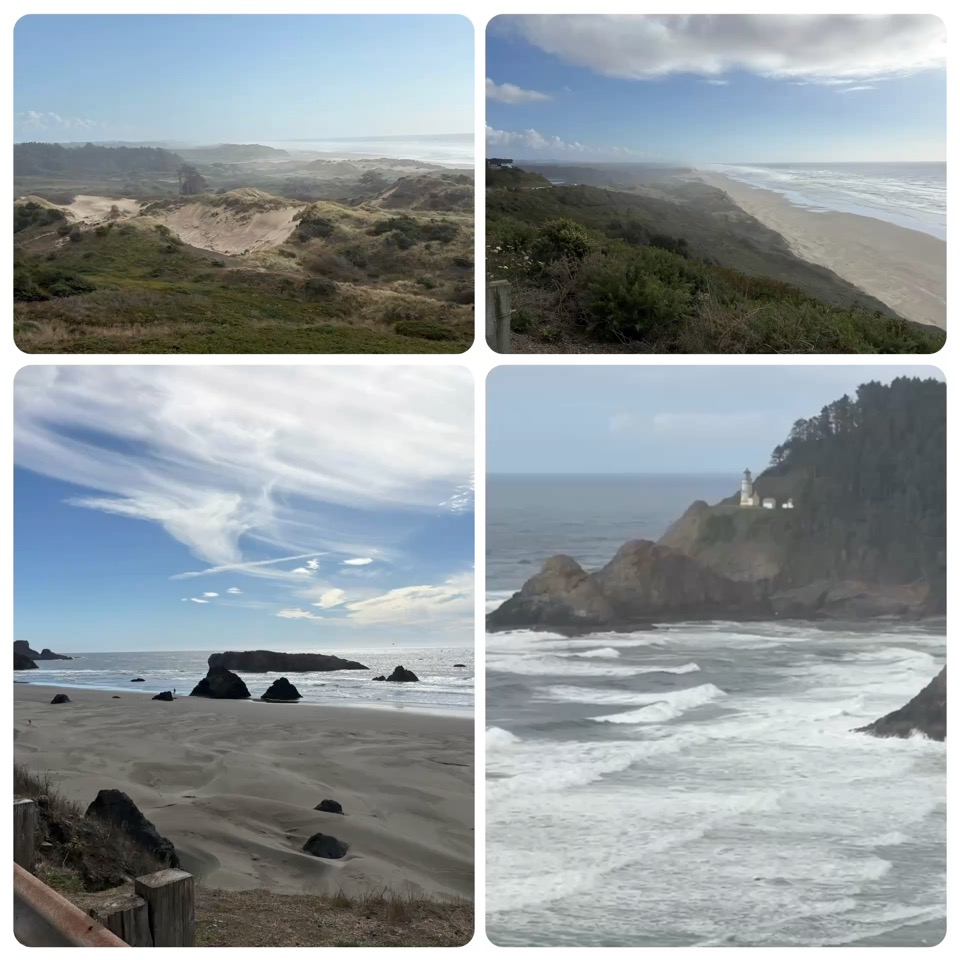
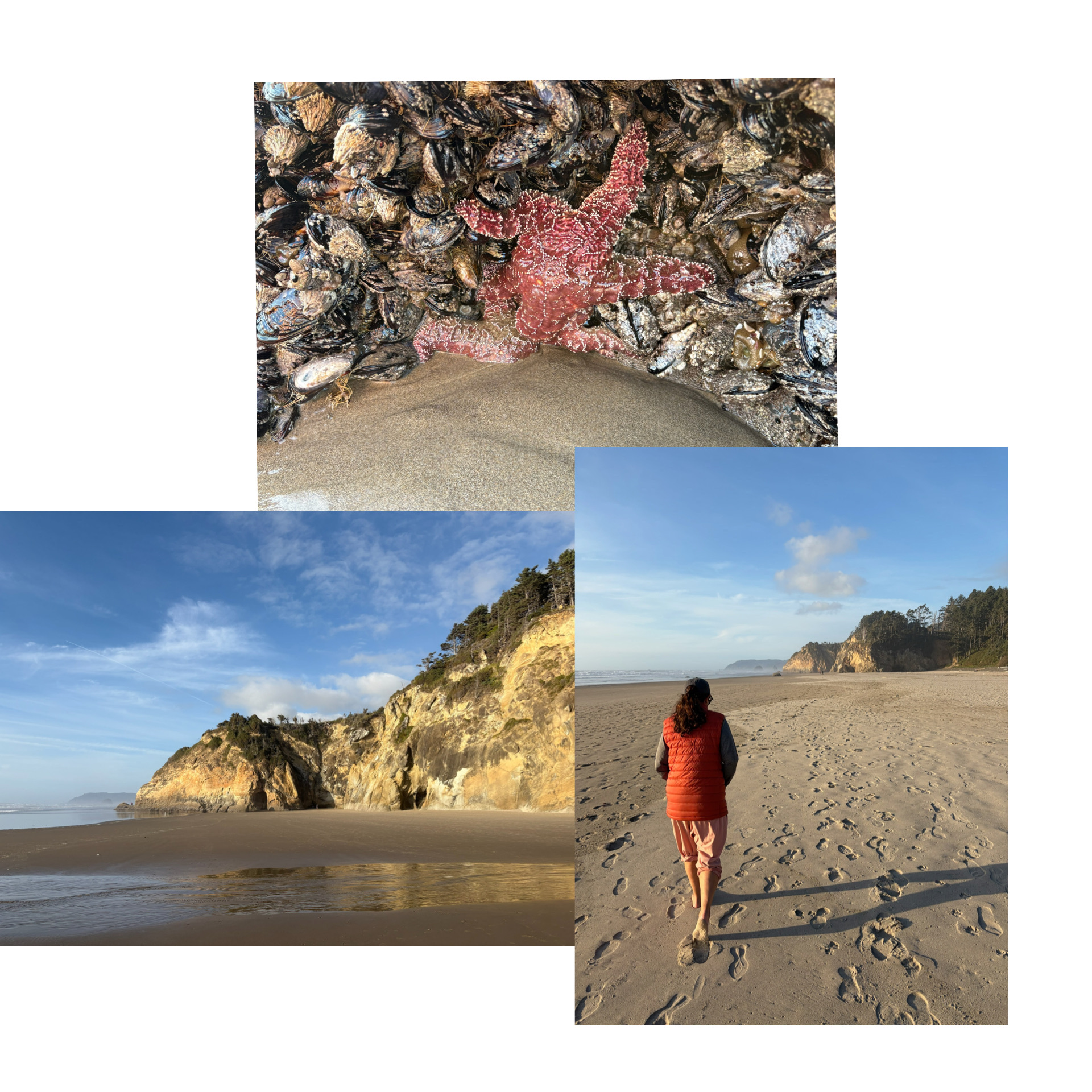
Notwithstanding a disappointing visit to Clatsop, the Corps of Discovery’s second winter fort, our drive along the Oregon Coast Highway was a joy from top to bottom. We loved the port town of Astoria, which is clearly committed to celebrating magic, oddities and local artists. A series of state parks diligently protects the coastal ecosystem while also making it available with day use sites and campgrounds every 10-20 miles. Cute towns are tucked in throughout; it’s nice to see those 2nd homes contained in little villages and not dominating the whole landscape. Hard to describe the wonders of the bluffs, headlands, dunes and sea stacks made luminous by the sunlit fog, or the quaint lighthouses, fish shacks, and cloud-trimmed mountains. Suffice to say that when we reached the California border, we agreed that we would gladly go back to the top and do it all again. Maybe someday!
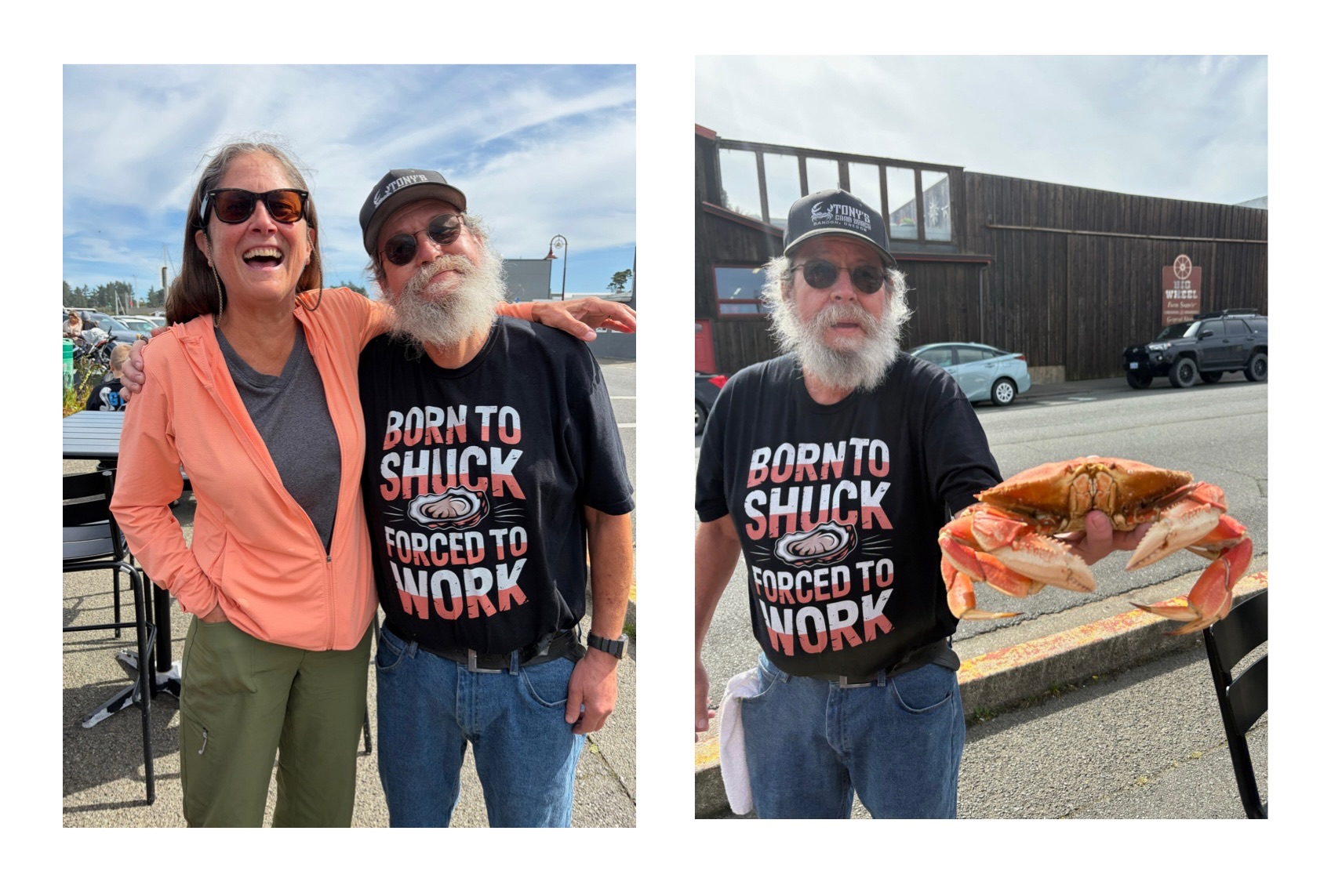
Our last lunch in Oregon was at Tony’s Crab Shack in Bandon, on a tip from fellow travelers. There we met John, self-declared dish washer, busboy, shucker and obviously emissary of goodwill – he even spoke a little local tribal language with nearby diners. John mentioned that he handles Walter. “I am the only one who can handle Walter.” When I asked who that might be, he brought out the resident 6-year-old Dungeness crab.
It was quite startling to leave the bright coast and enter the shade of the towering redwood forests. Another excellent ranger-led walk produced fun-facts and cool terms (new to us) to enhance our appreciation:
- Huge bulges on the trunks of these behemoths (“burls”) are full of genetic material, allowing the trees to clone themselves. They can even produce clones in the canopies. They are also among the fastest mutating species on earth, and the deadfall decays extremely slowly, making them “biologically immortal.”
- Additional means to ensure their longevity - growing in clusters known as “fairy circles.” The charred, hollowed caves in their trunks resulting from fires are dubbed “goose pens”and don’t stop their continued climb toward the heavens.
- Their canopies house several interesting creatures. Wandering (or “skydiving”) salamanders boast 18 toes and they can increase the blood pressure to pop off a tree or decrease it to stick the landing. Ocean shrimp live on moist fern mats high in the canopy. Their eggs are presumably deposited there by marbled murrelets, sea birds that nest in the trees whose chicks fledge solo, taking a ~15-mile direct flight to the sea.
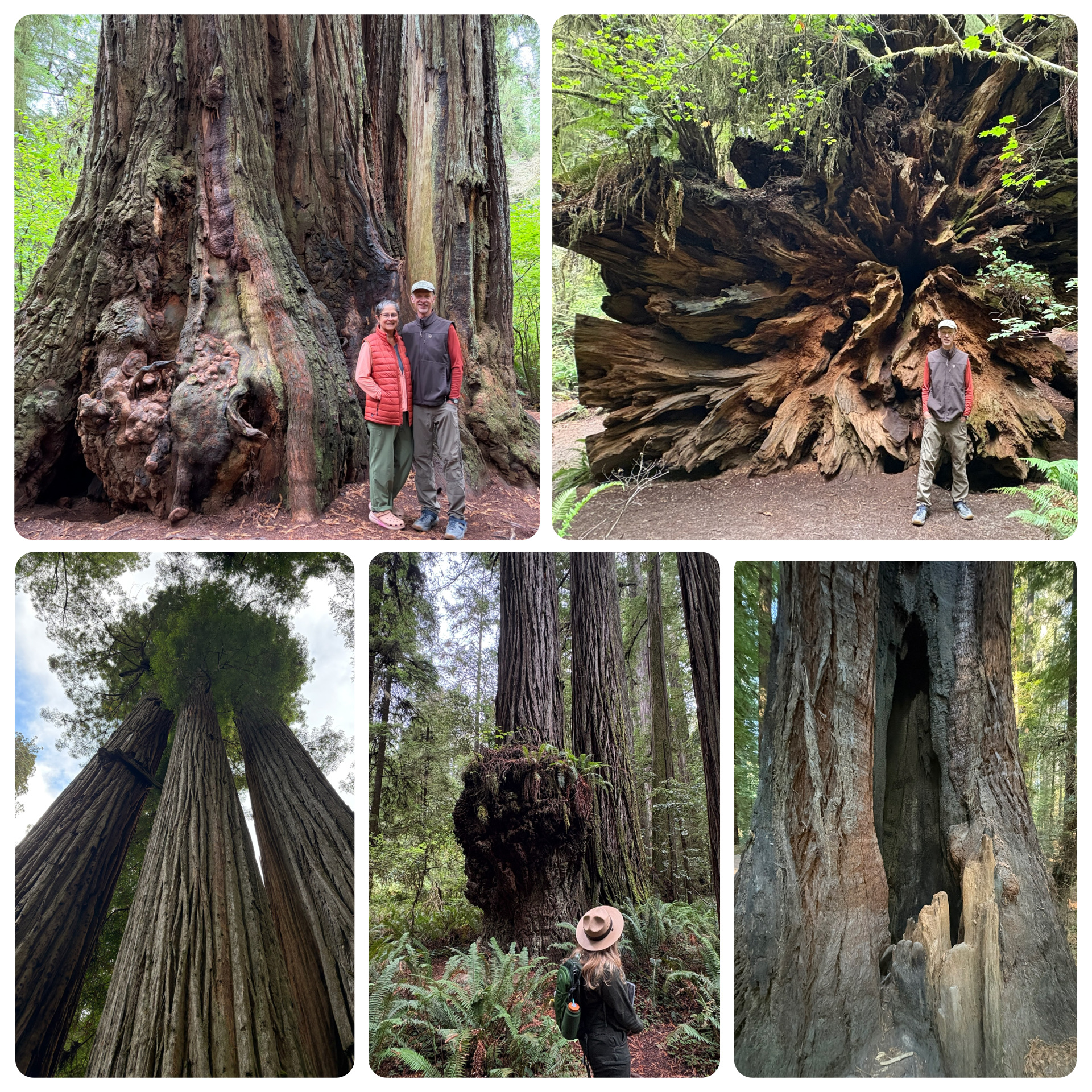
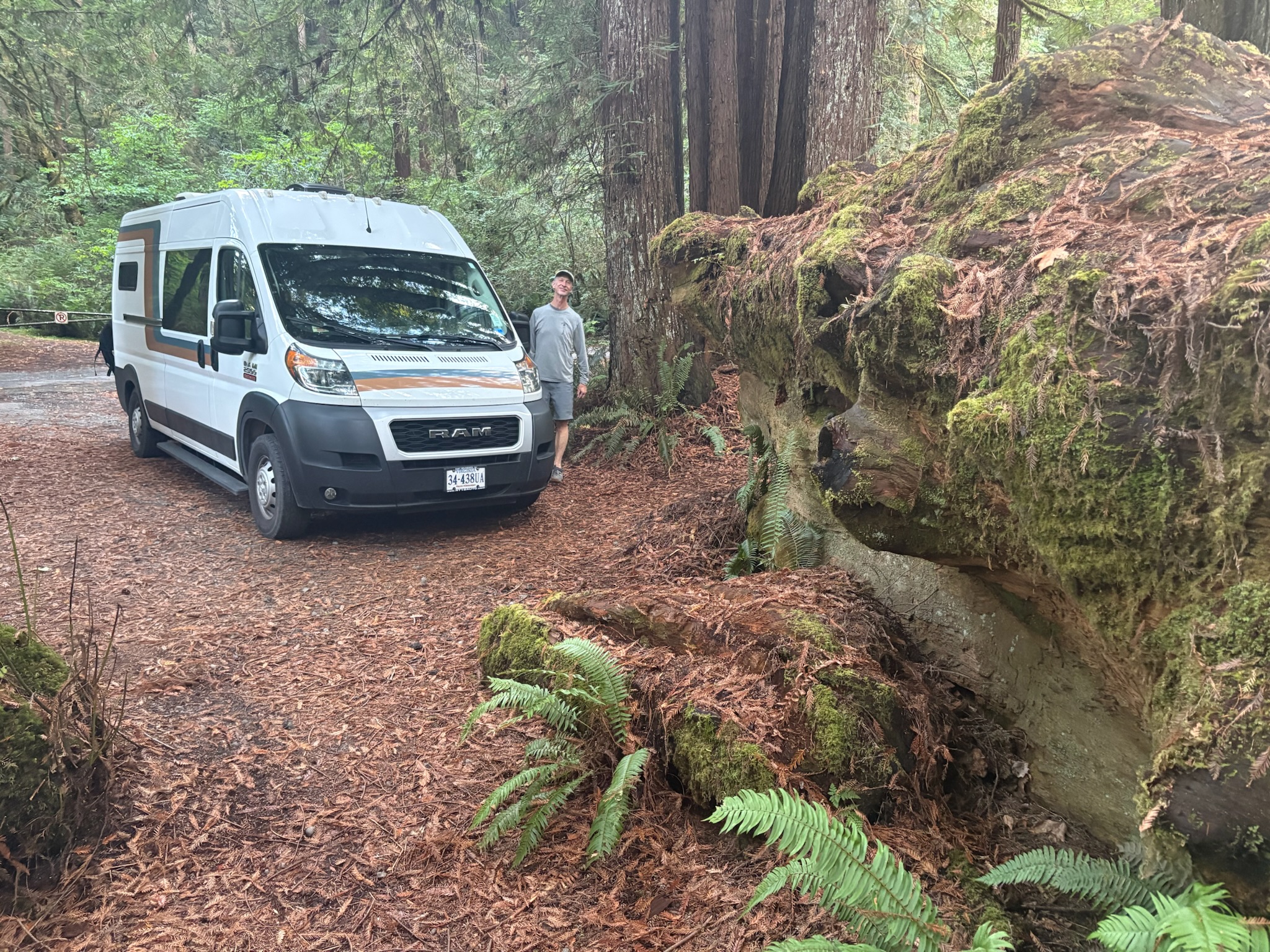
We camped by the Avenue of Giants and walked in the Grove of Titans, which Paul compared to visiting a cathedral. The hushed, reverential tones of fellow hikers indicated they too were awed. We left one campsite that was way down in a narrow creek valley with the eerie feeling that if we didn’t depart soon, even Evangeline would soon be covered in moss.
By the time we were nearing the end of our wanderings through the Northern California redwoods, yet another audiobook coincidence occurred. John Steinbeck’s travels back to his homeland provoked him to riff on the “cathedral hush” effect of the redwoods and he wondered, “but what will it be on Charley?” Amusingly, he was frustrated with Charley’s nonchalance, and even forced him to look up, which only made the poor dog sneeze. Steinbeck also speculated that the trees among which he came of age can communicate with one another - in 1960 – long before confirming data was produced!
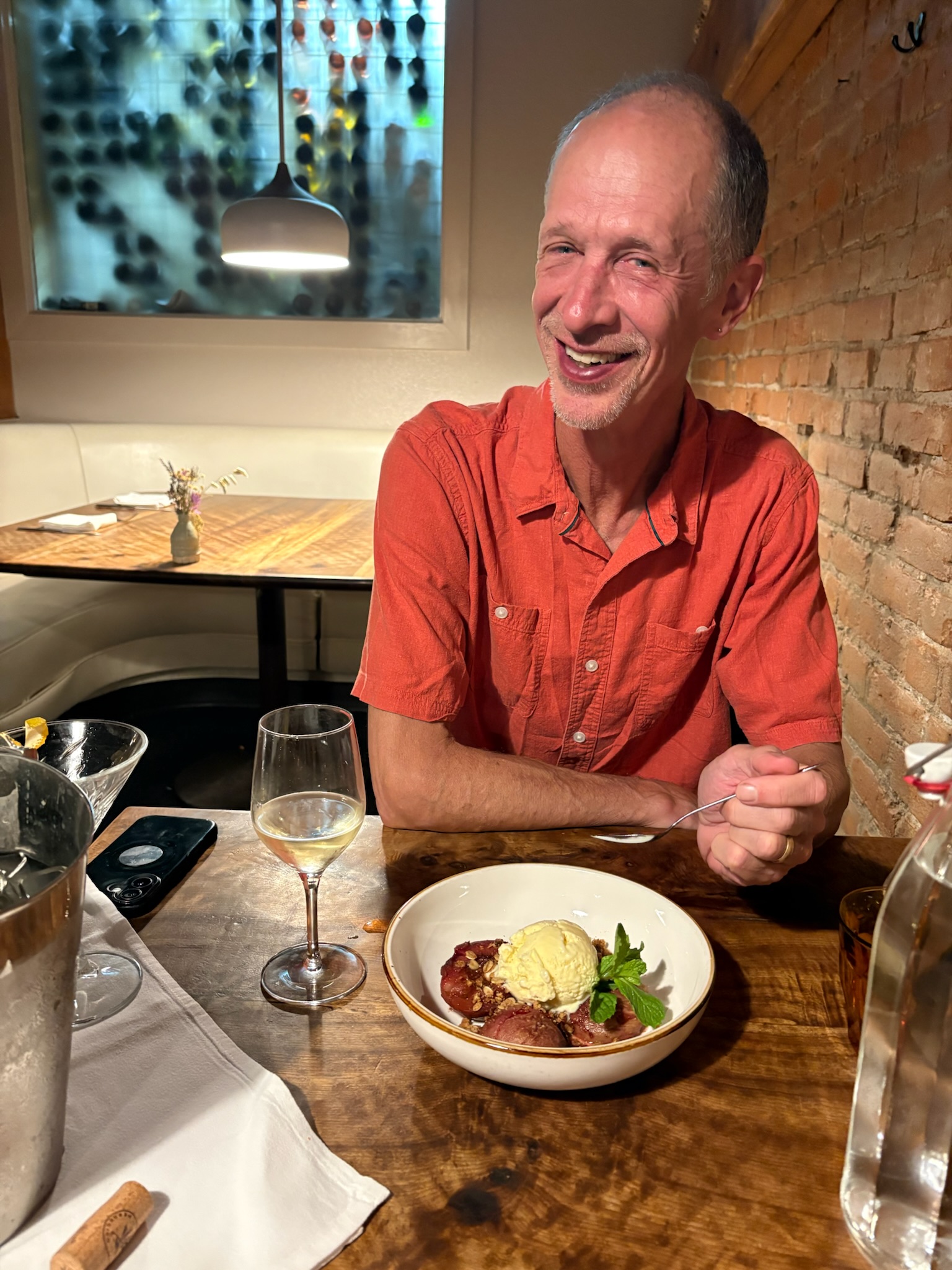
We have now emerged from the cloisters and are warming up in the Mediterranean climate of Mendocino county, where we are celebrating Paul’s birthday and looking forward to a “mooch march” through the Bay Area before turning eastward into the Sierras. As ever, comments and suggestions are much appreciated.