The Glories of Yosemite in Autumn (and some theme songs)
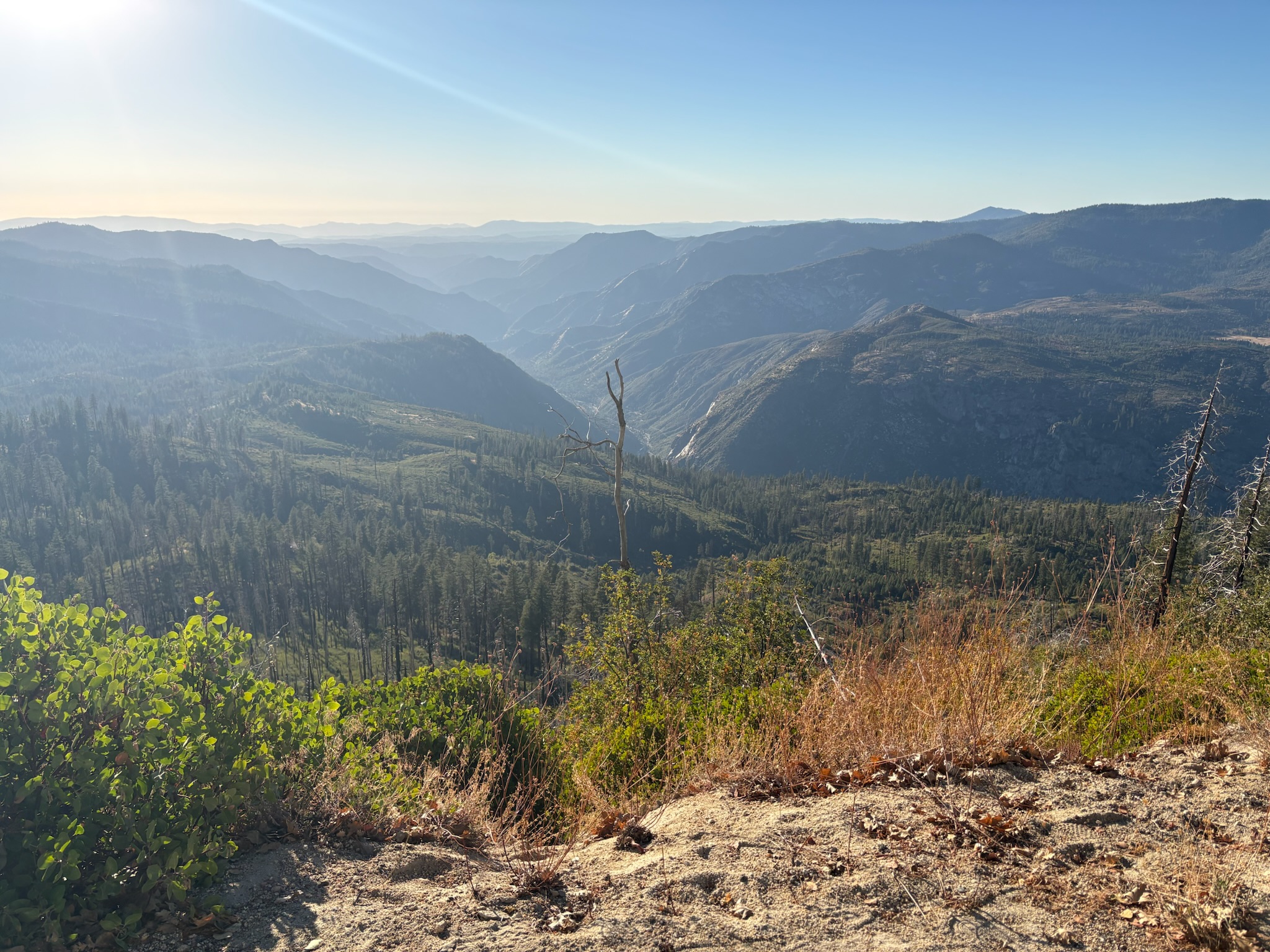
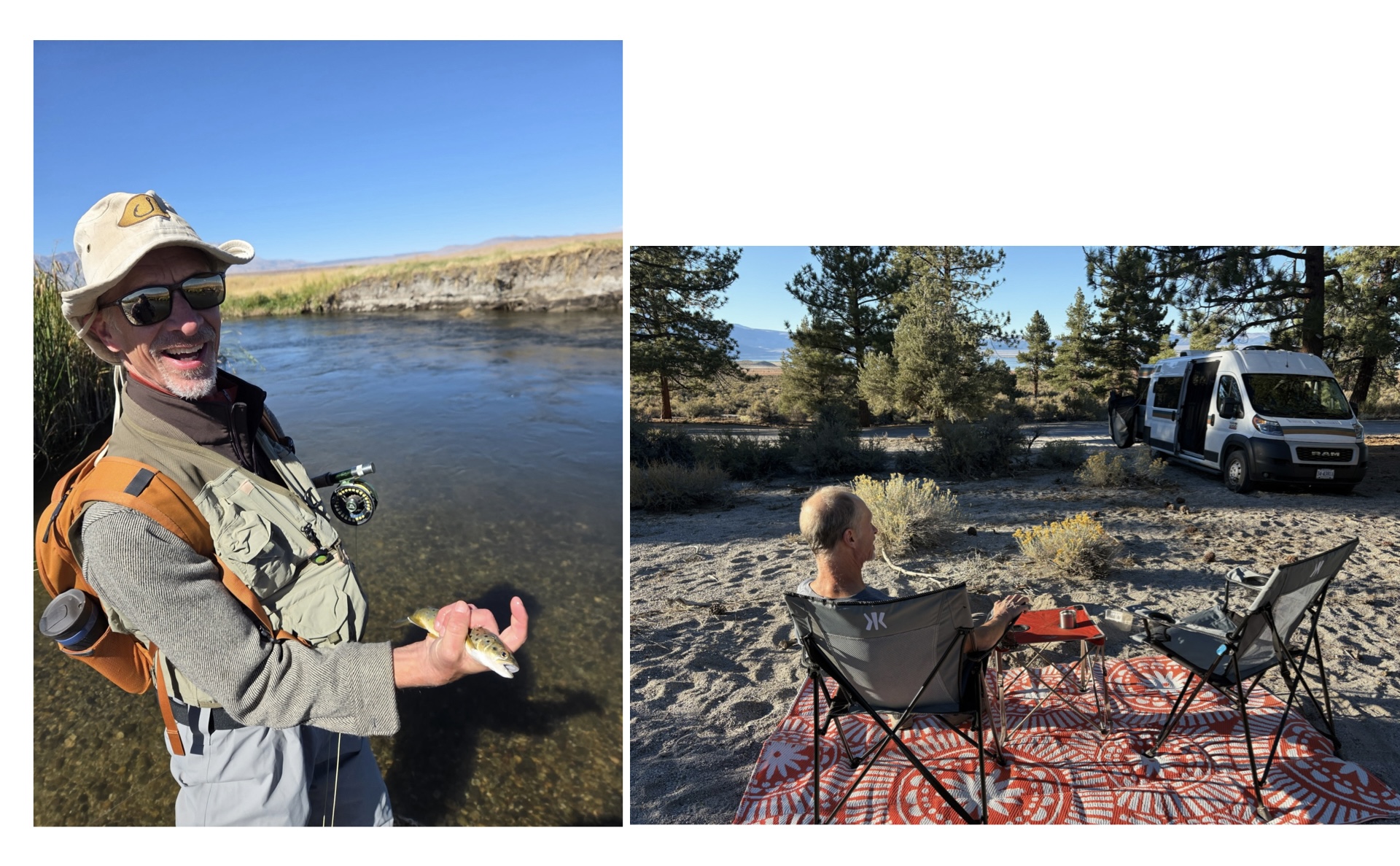
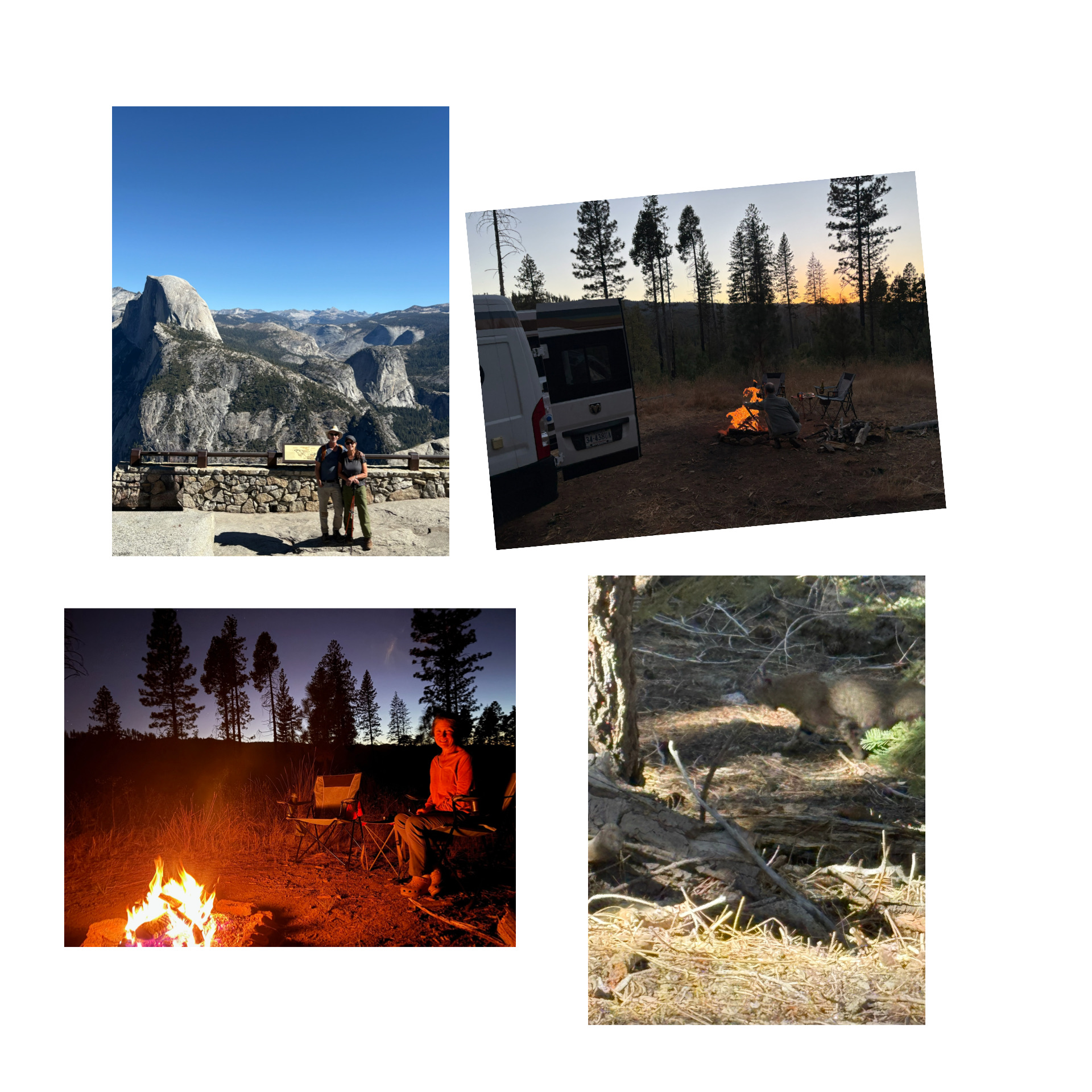
Paul’s two half-days of fishing lessons on the Owens River gave me a welcome chance to regroup based in an Airbnb in the appealing town of Bishop, CA. For the record, Paul had a great time fishing with his new buddy and guide, Steve from Sierra Trout Magnet Fly Shop, but still has so much to learn. We headed up toward Yosemite, boondocking by Mono Lake with a strong sense of being far from any other humans (‘til a camper truck drove by :). On the way, we checked out our first hot spring that was not developed into a resort. It was in the middle of nowhere, down washboarded dirt roads. Someone had rimmed it with rocks so that it was like a hot well, with two naked people in it.
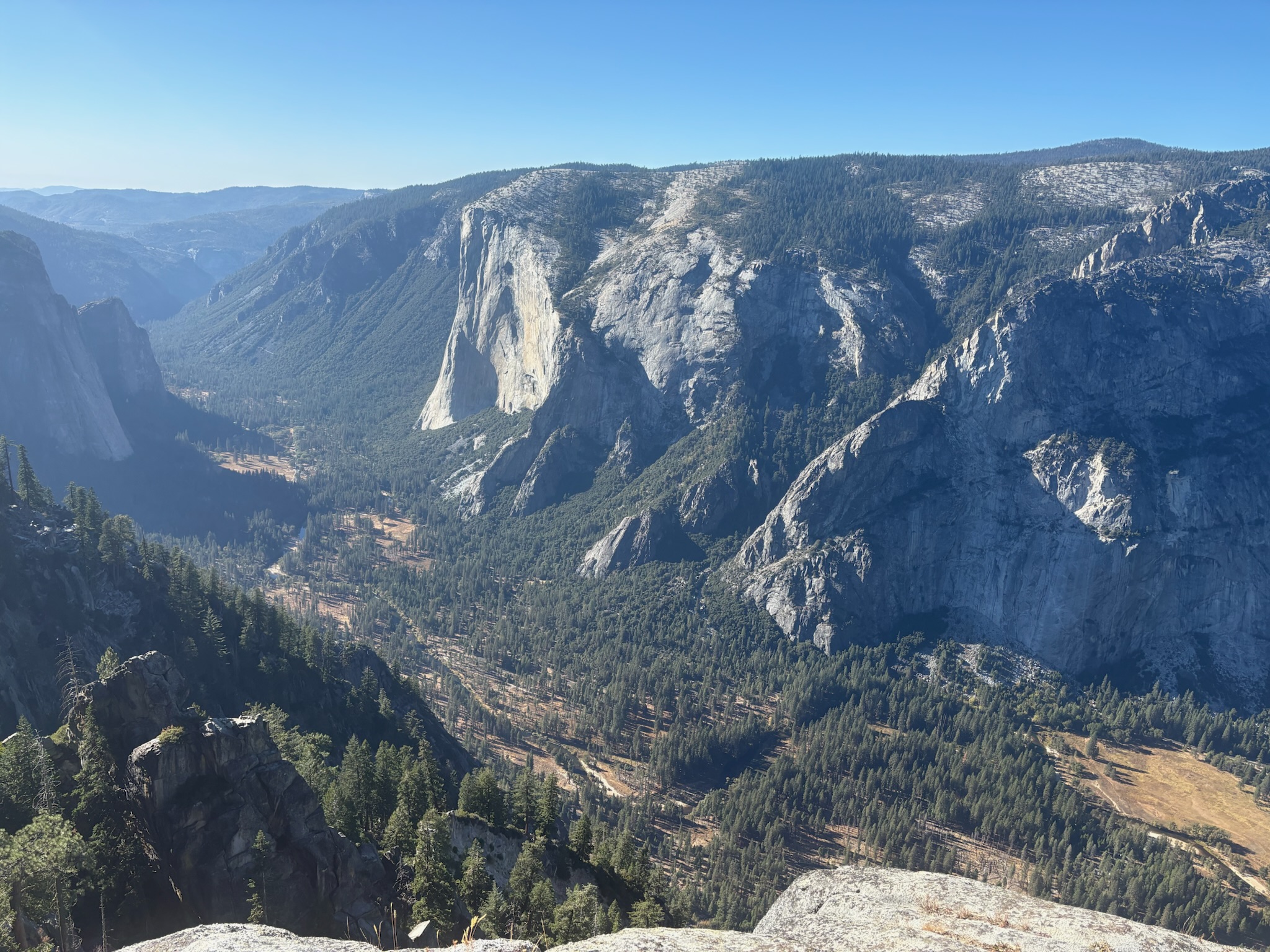
After a delicious breakfast in a lively spot in Lee Vining, full of friendly, outdoorsy folks of all ages, we turned onto the Tioga Pass and climbed up into the park. The scale of Yosemite is stunning in both height and breadth. We spent our time in the area surrounding the iconic Valley, which itself is far longer, deeper and wider than we had imagined.
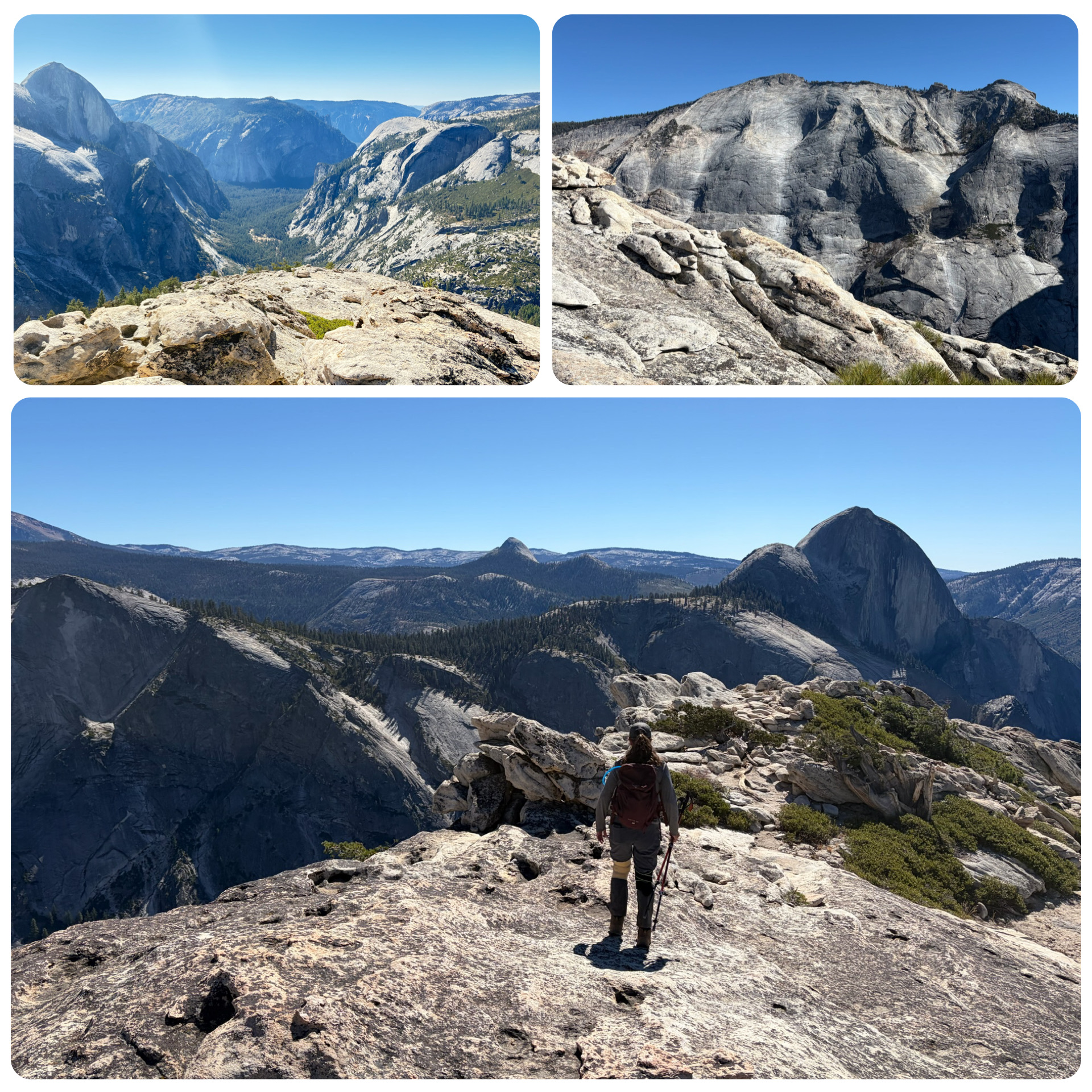
Our first hike was along an enormous, sheer cliff face, decorated with huge swirls, that we learned later is dubbed Clouds Rest. The trail led to the pinnacles of Mount Watkins, where we could see Half Dome just across the narrow upper Valley. A couple of days later we looped through the Valley and up to the south rim, and from Glacier Point we viewed the other side of Half Dome, Mount Watkins, and many other giant granite domes. But the most amazing sight there was a bobcat on the prowl. It made me cry, like a child when given a puppy.
Having delightedly dithered and run out of time to return to camp before darkness fell, and not wanting to burn out my knees on the final descent, we tried hitchhiking down to where the van was parked at Glacier Point. An Indian American couple kindly offered to drive us down there, going 20 minutes out of their way. None of us minded seeing the views from the windy road again. There’s a turn in the road with the Valley below from which a stock photo had been taken featuring a campervan. I had used that photo as my video call background and had featured it in my “stepping away from this work” announcement on LinkedIn – so fun to see that spot with my own eyes!
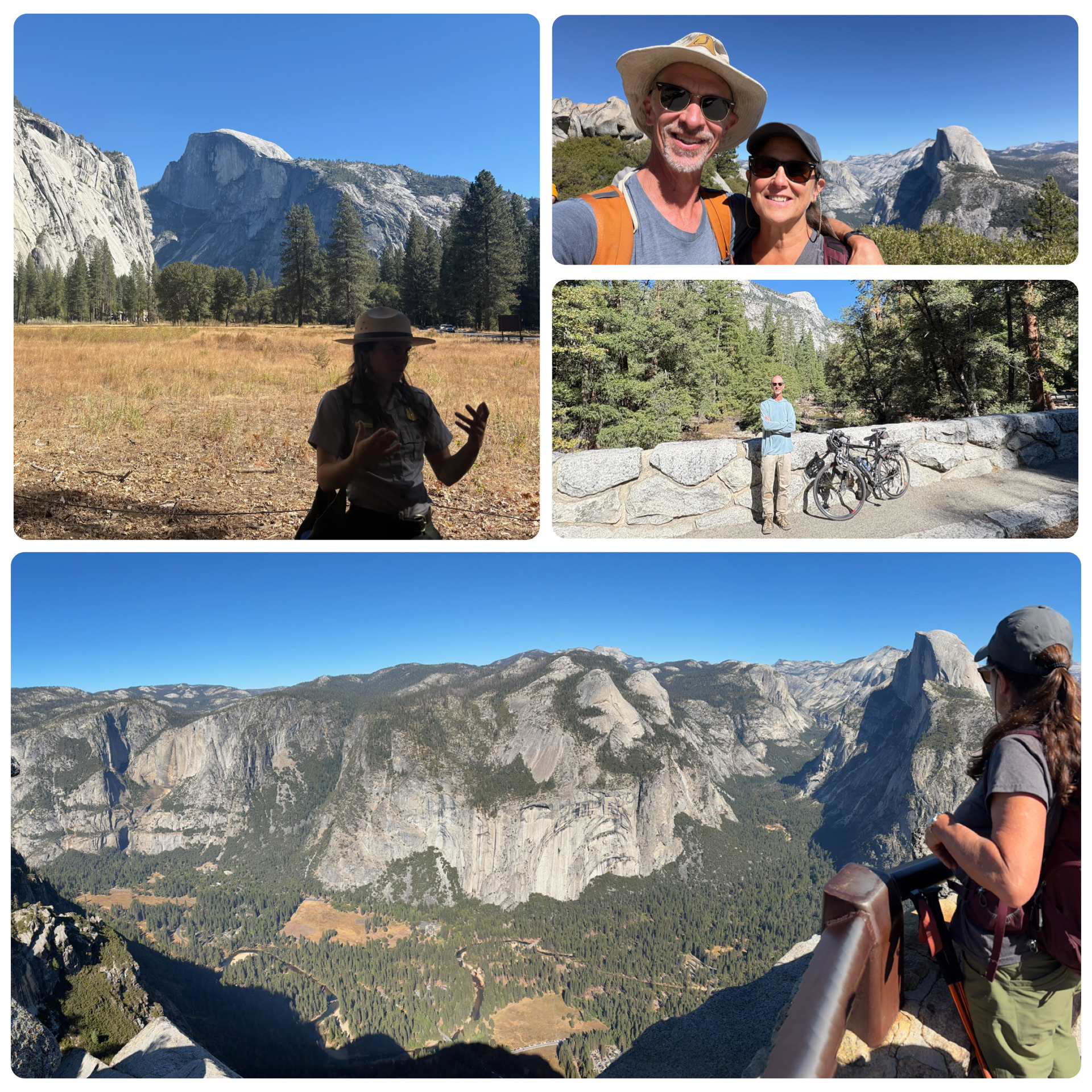
The Valley, as many know, contains a vibrant village with a series of settlements – from vast tent-only campgrounds for the car campers and “dirtbag” climbers, to glamping sites and lodges, plus homes for the concessionaires and staff. We joined many touring it on bikes, then went on another Ranger walk.
The most compelling story on this one was about the comeback of the peregrine falcons. By the time DDT was banned in 1972, the falcons had not been seen in Yosemite for 30 years. The following year, climbers found and reported a nest. At the behest of conservation biologists, the climbers went back up to the nest and replaced the fragile eggs with wooden ones. The real eggs were then gingerly carried back down, incubated, hatched and returned to the nest – where they were immediately accepted and fed by the parents! Now there are hundreds of falcons (we saw one :), and rock climbers still collaborate with their stewards, reporting nests so that climbing routes can be closed to give the falcons a chance to raise their young undisturbed.
The climbers, by the way, look like little dots on the rock walls, only slightly more visible with binoculars. With no “Climbing Ranger” present to explain how it’s done, we accosted a couple of climbers who were organizing their equipment at the base of El Capitan. Speaking mostly in jargon I somewhat understood (thanks to climber son, Bryan), one of them, Cody, explained the different styles of climbing visible on the wall before us – including noting that the person climbing solo would have to cover each section three times to place and retrieve his equipment.
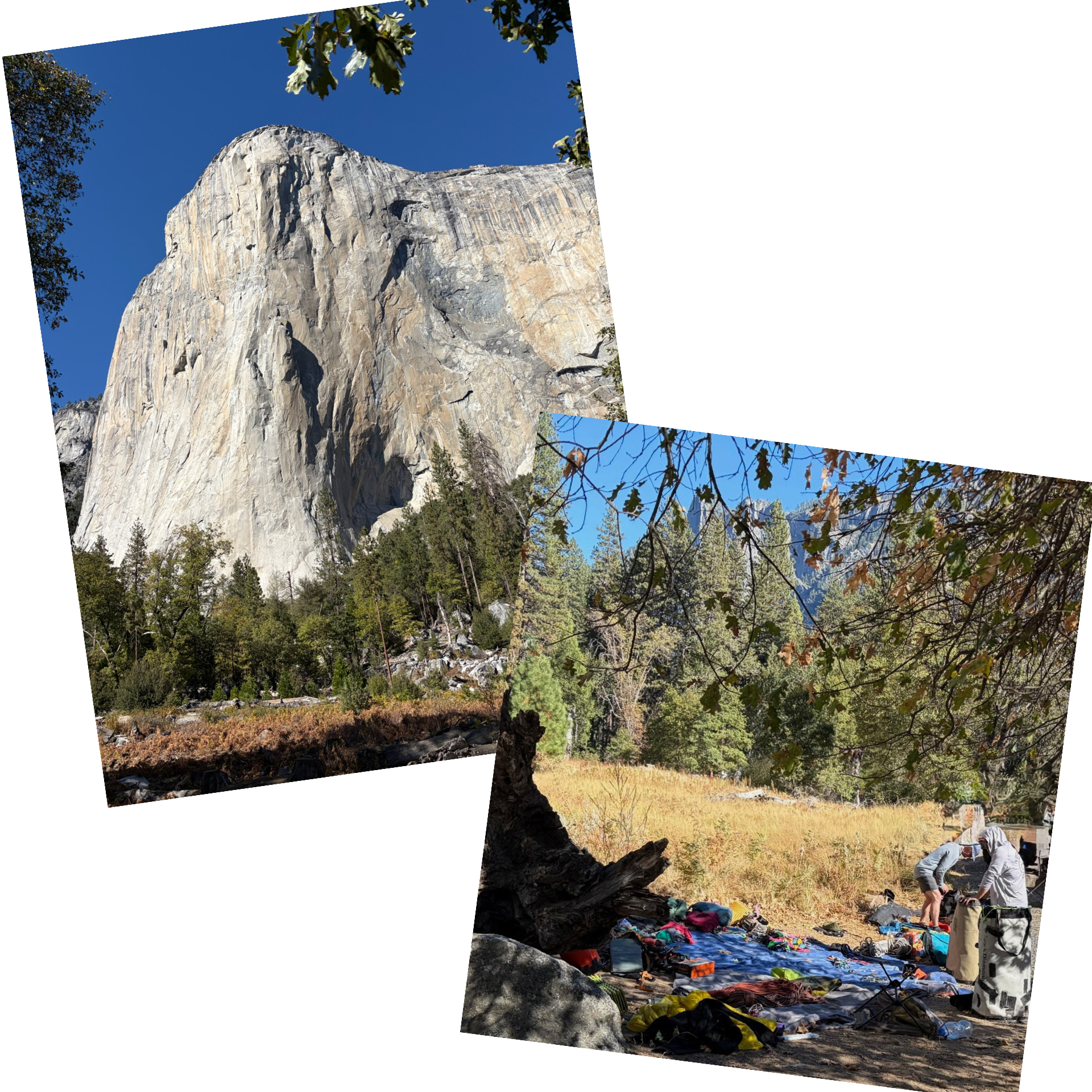
Cody also filled us in on their plans to ascend the monstrous wall, allowing about a week but provisioned for 10 days “in case the rain slows us down.” His threesome will be carrying 24 gallons of water – and I find our 6-gallon water tank too heavy! They will also carry an iPad to watch movies while pinned to the wall at night. The calculations were another echo of our current audiobook – Jack London’s Call of the Wild, which we had begun before visiting the London museum in Sonoma. In that exquisite book, inept fortune-seekers pay the ultimate price for their miscalculations. Also (spoiler alert), lead dog Buck answers the call and goes wild, having learned to be a predator – unlike Luna the Jack Russell who was recently rescued after a month on the loose in Yellowstone, reportedly surviving on … poop.
After 5 days in Yosemite, blessed with warm, slanting sunshine and bearably chilly mornings, we departed feeling deeply satisfied, but knowing we had left much undone. We had not gone up to the Hetch Hetchy Reservoir area, nor down to Wawona, or hiked and fished around the Tuolumne Meadows. God willing, we will go back in the spring or early summer, when the falls are cascading and Mirror Lake is refilled with its famous reflecting waters.
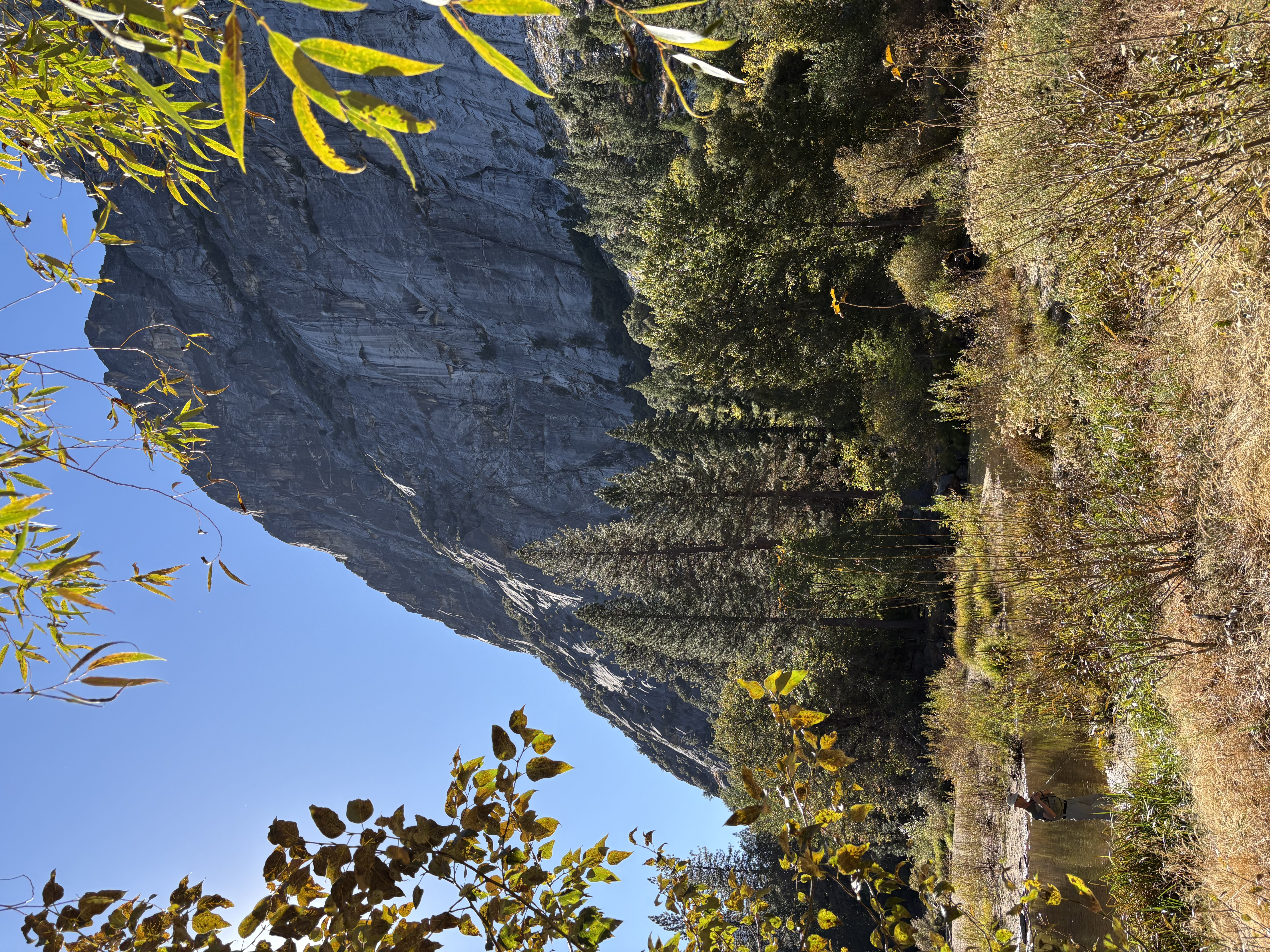
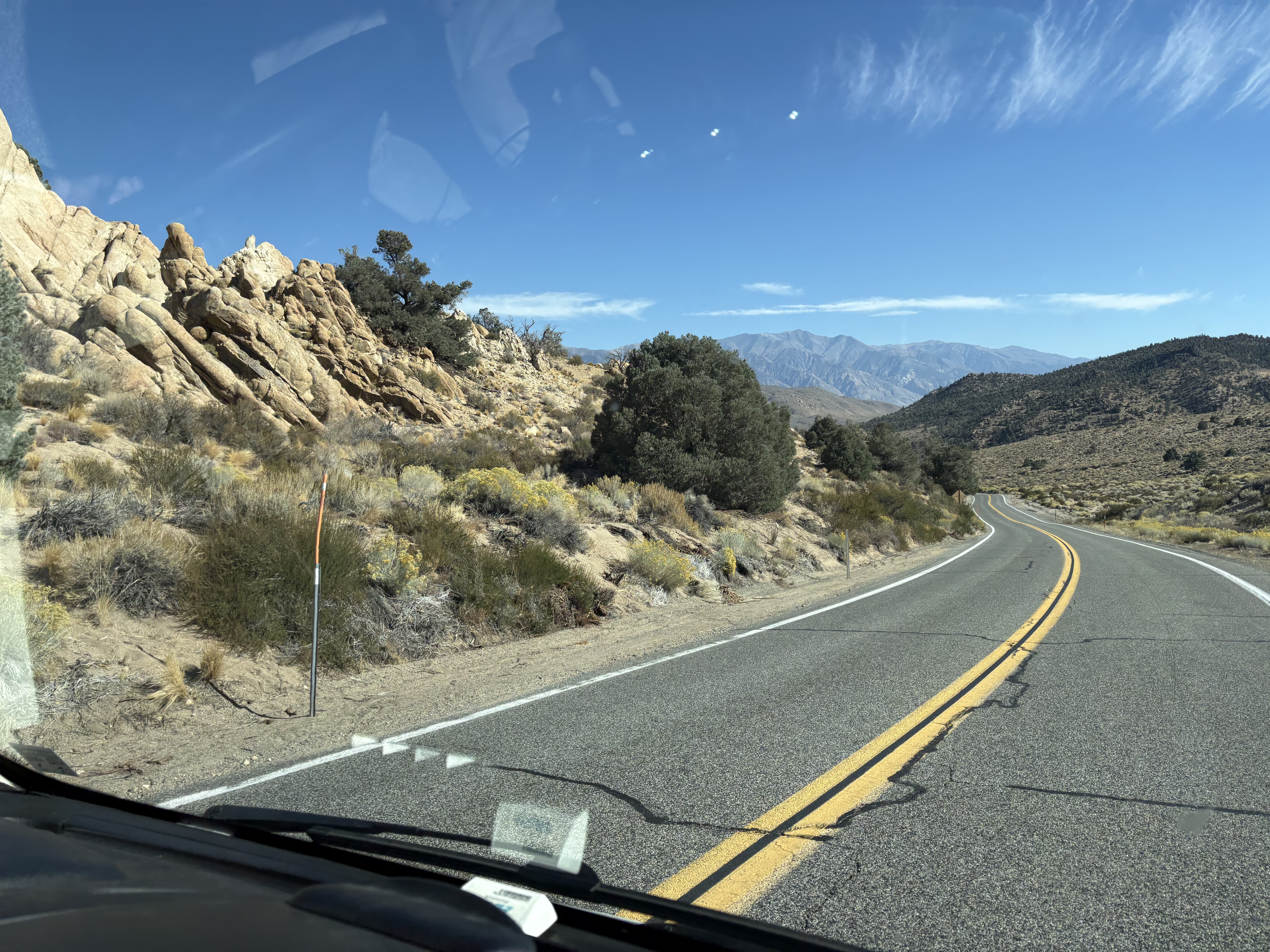
On the way out as we wound back the way we had come, through the breathtaking Tioga Pass, Sheryl Crow’s “Everyday is a Winding Road” came up in our playlist, and Paul exclaimed, “I will always remember this moment!” So, we thought we’d share a few of our theme songs:
- California Stars by Wilco
- If Something Breaks [we’ll fix it on the road] by Front Country
- Drive South by John Hiatt
- These Are the Days by 10,000 Maniacs
- It’s a Good Day To Be Alive by Chuck Prophet
- Everyday is a Winding Road by Sheryl Crow
- Call Me the Breeze by Lynyrd Skynyrd
- [Loving] Every Minute by JJ Grey & Mofro
For now, wanting to make the most of autumn before El Nino’s extreme weather kicks in, we are heading east. We look forward to visiting the iconic sights in southern Utah, and if the weather holds, in southern Colorado and northern Arizona on the way to join my boys for Thanksgiving in Denver.